Animated Deepdives

The Backward Pass

First-principles, illustrated deep dives into how modern AI models are built, trained, and scaled.

Showing all 75 articles

Animated standardized plates comparing vision-language model architectures.
Featured · VLM architectures

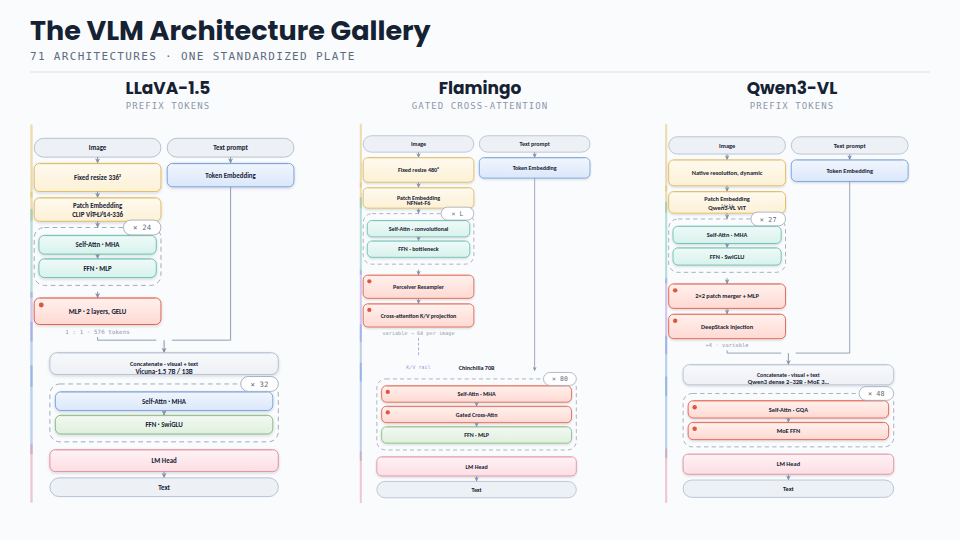
The VLM Architecture Gallery

Seventy-one architectures on one standardized plate, from gated cross-attention to encoders absorbed into the base model.
Published Updated 34 min read
VLMsArchitectureToken Budgets
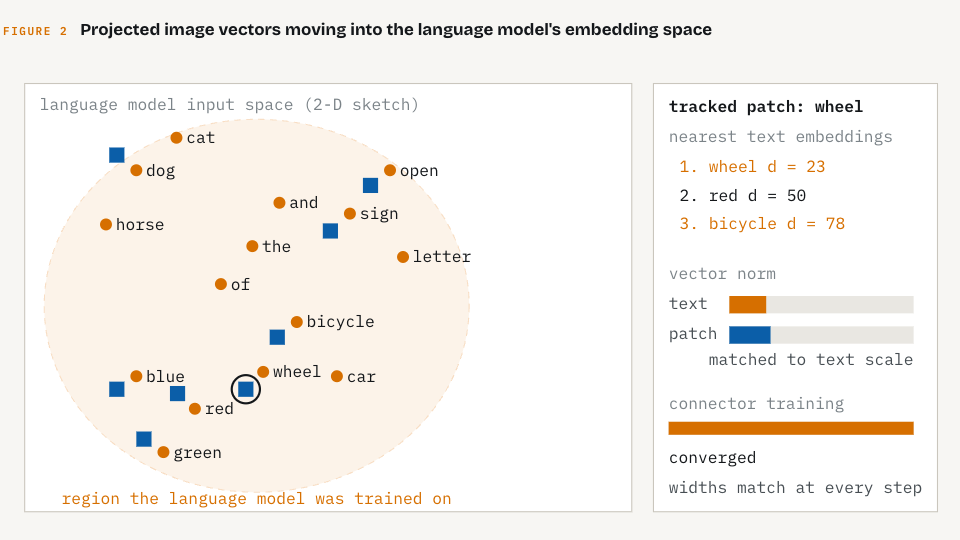
Projected image patches start outside the language model's embedding space and move next to related words such as wheel and red as the connector trains.
Vision-language models · 04

Teaching Language Models to See

Why a good vision encoder plus a good LLM is not yet a VLM: freezing, data mixtures, resolution, objectives and data quality in real pretraining recipes.
Published Updated 39 min read
VLM PretrainingTraining DataMultimodal
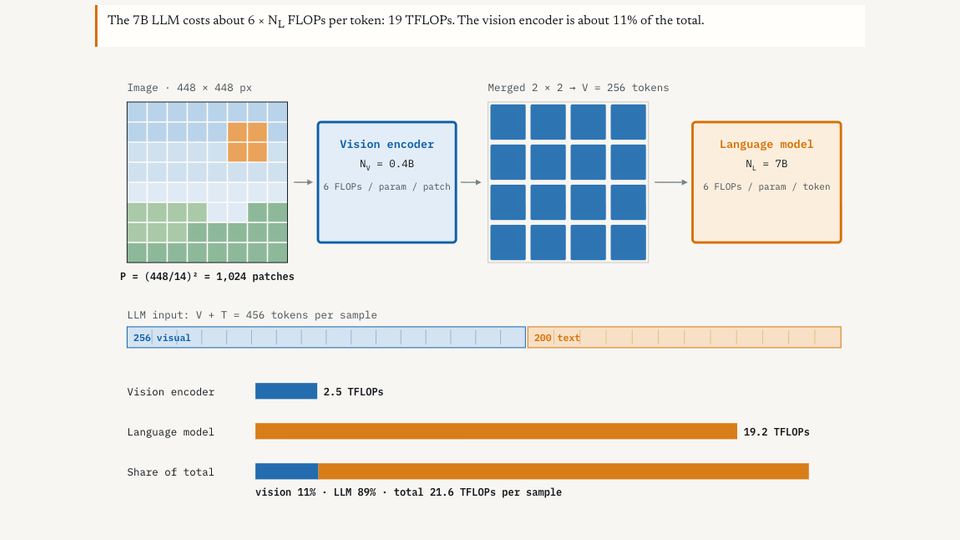
One training sample's FLOPs: a 448-pixel image cut into patches, encoded, merged 2x2 into 256 tokens and joined with text in a 7B LLM, with bars showing the vision share of compute.
Vision-language models · 05

How Vision-Language Models Scale

How compute splits between a VLM's two towers, what vision, data, fusion and visual-token scaling studies show, and what open VLMs spend.
Published Updated 40 min read
Scaling LawsVLMsCompute Budgets
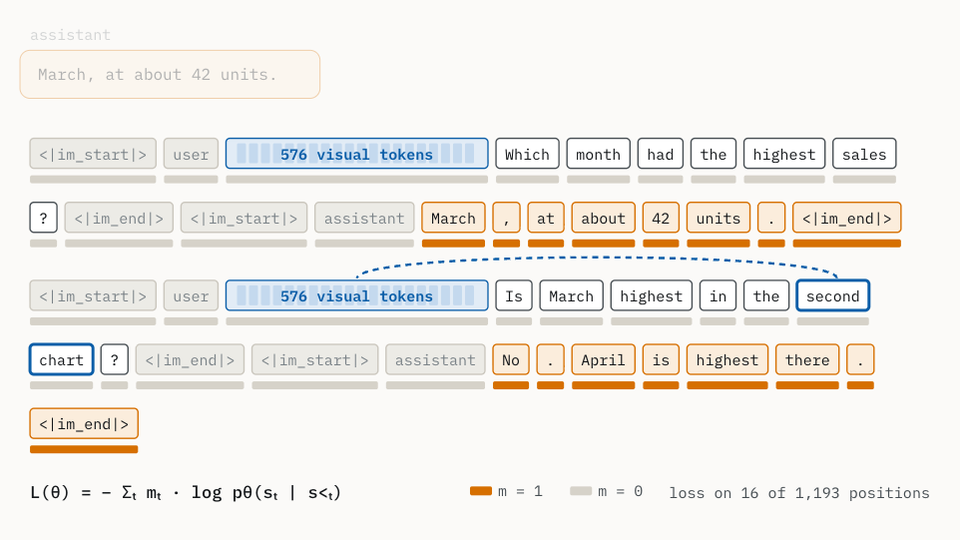
A two-turn image conversation becomes a token sequence: each image placeholder expands into 576 visual tokens and a loss mask lights up only the assistant answer tokens.
Vision-language models · 06

One Model, Many Visual Skills

How visual instruction tuning turns a pretrained VLM into one assistant: loss masking, task mixtures, format conflicts, forgetting and synthetic data.
Published Updated 42 min read
Visual Instruction TuningData MixturesVLMs
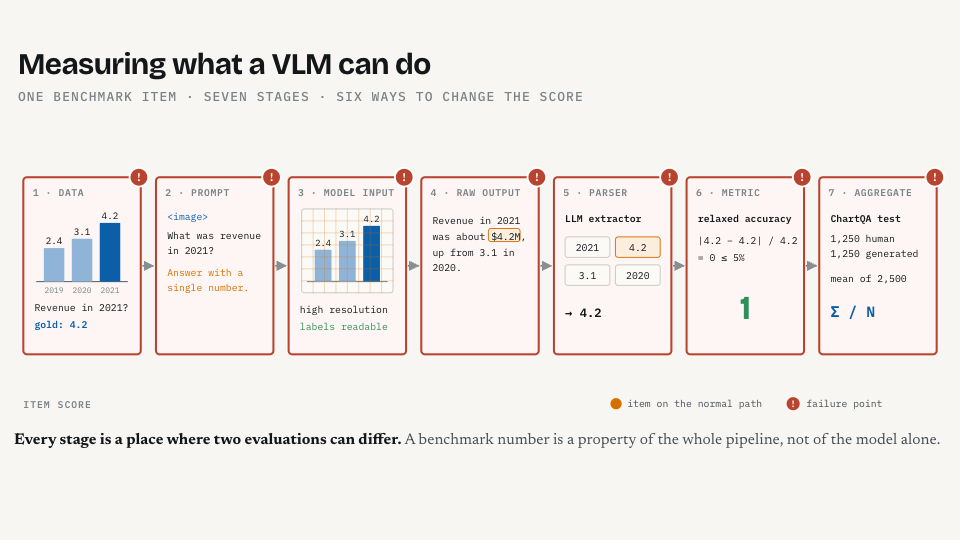
A chart question flows through seven evaluation stages, from data and prompt to parser, metric and aggregate, showing how each stage can change the score without any change to the model.
Vision-language models · 07

Measuring What a VLM Can Do

What a VLM benchmark score really measures: task, data, metric and protocol, the main benchmarks by capability, and how to read a results table.
Published Updated 44 min read
VLM EvaluationBenchmarksMetrics
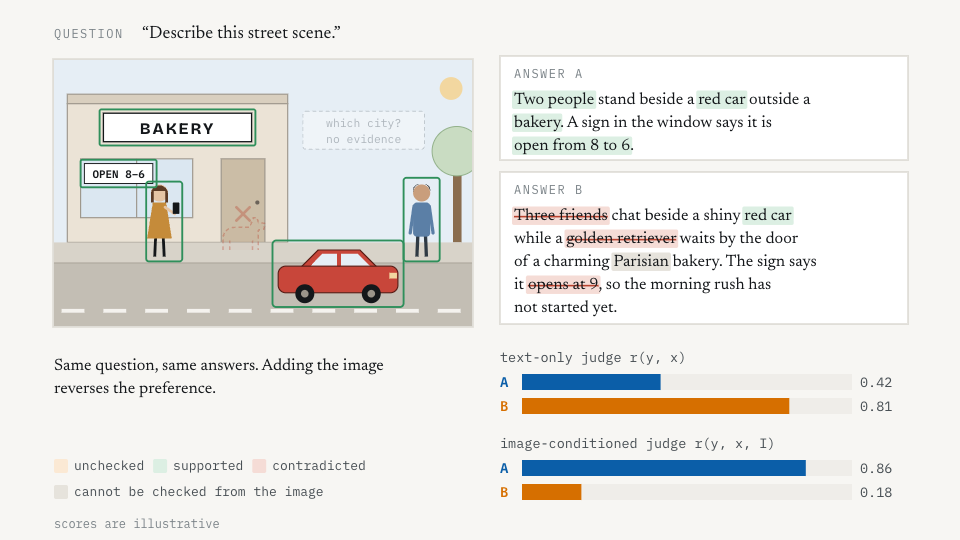
Two answers about a street scene: a text-only judge prefers the longer one; once each claim is checked against the image, an image-conditioned judge reverses the preference.
Vision-language models · 08

Aligning Vision-Language Models

How to teach a vision-language model to prefer answers the image supports: hallucination, image-conditioned DPO, negatives, AI judges and safety.
Published Updated 45 min read
VLM AlignmentHallucinationPreference Optimization
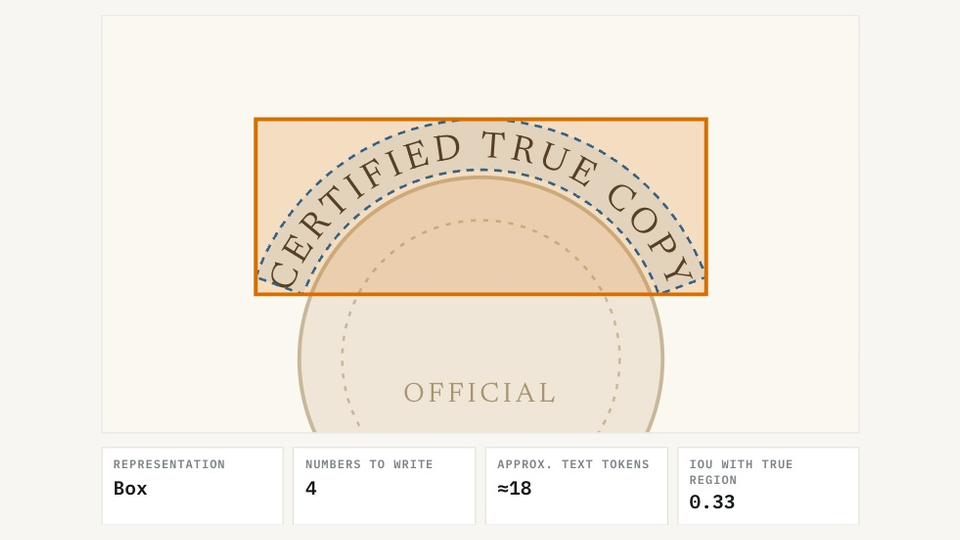
A curved line of text around a seal located five ways: a centroid point that misses the text, a box that is mostly background, a polygon, and a mask that covers exactly the text, with token-cost and IoU readouts.
Vision-language models · 09

When Language Must Point

How VLMs show where they see: points, boxes, polygons and masks, coordinate tokens versus SAM-style decoders, granularity, grounded reasoning and metrics.
Published Updated 42 min read
Visual GroundingSegmentationVLMs
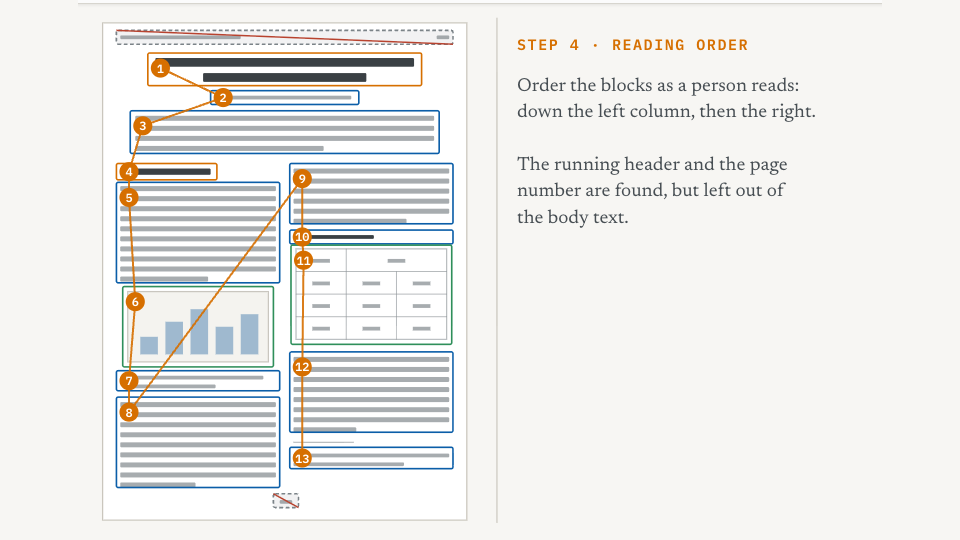
A two-column page is decomposed step by step: text lines are boxed, blocks labelled, reading-order arrows run down each column, a table header spanning two columns is zoomed, and the page becomes a hierarchy tree and Markdown.
Vision-language models · 10

How VLMs Read Documents

How VLMs turn a page into text and structure: OCR pipelines, OCR-free parsers, token budgets, output formats, tables, reading order and evaluation.
Published Updated 42 min read
Document AIOCRVLMs
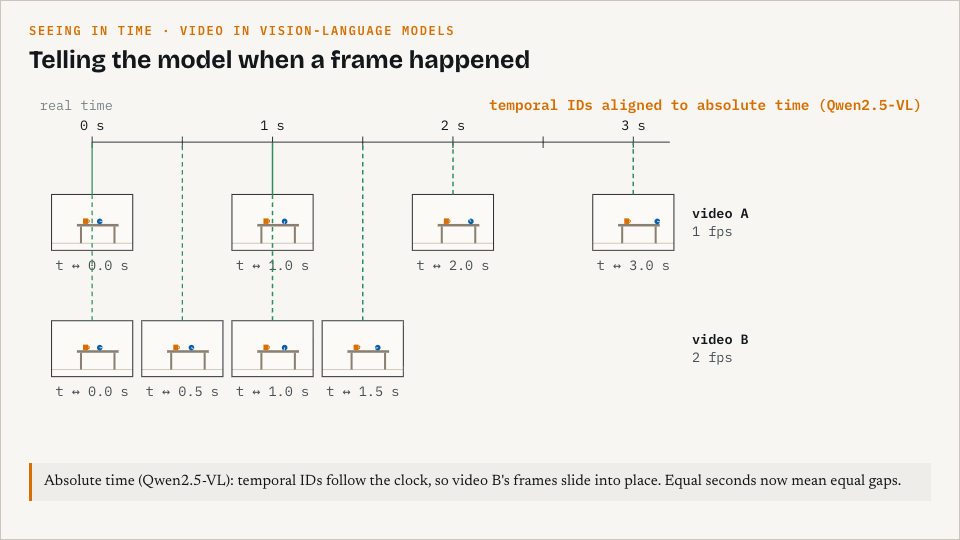
Two videos of the same event sampled at different frame rates: frame-index temporal IDs misalign them, absolute-time IDs line them up on a real-time ruler.
Vision-language models · 11

Seeing in Time

How video VLMs sample, encode, time-stamp and compress frames, find moments, and why many video benchmarks can be solved from a single frame.
Published Updated 44 min read
Video UnderstandingVLMsLong Context
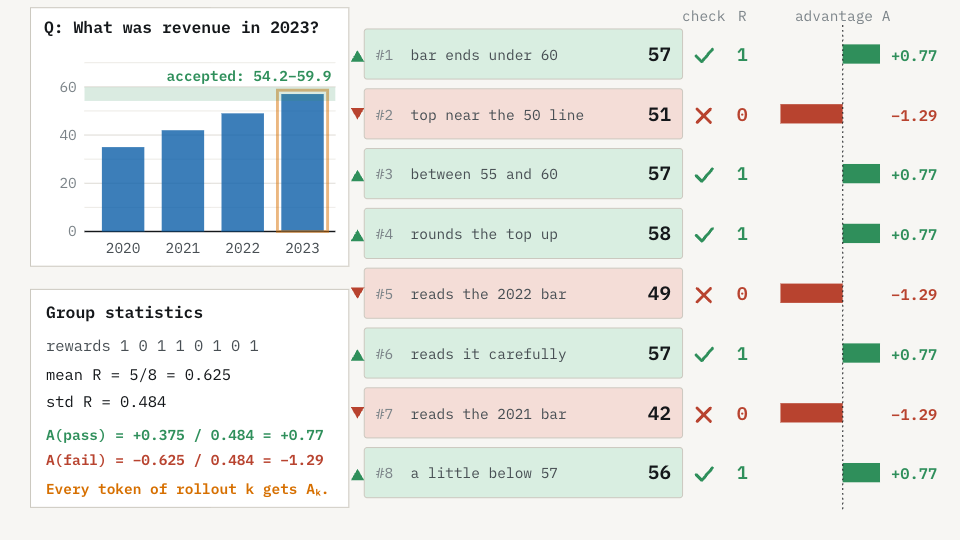
One GRPO step on a chart question: eight sampled answers are checked with a tolerance, rewards become group-normalised advantages, correct readings are pushed up.
Vision-language models · 12

Rewarding What the Model Sees

What a verifiable reward looks like for images: IoU, OCR and execution rewards, which weights RL changes, reward hacking, and zero-advantage groups.
Published Updated 42 min read
Reinforcement LearningVLMsReward Design
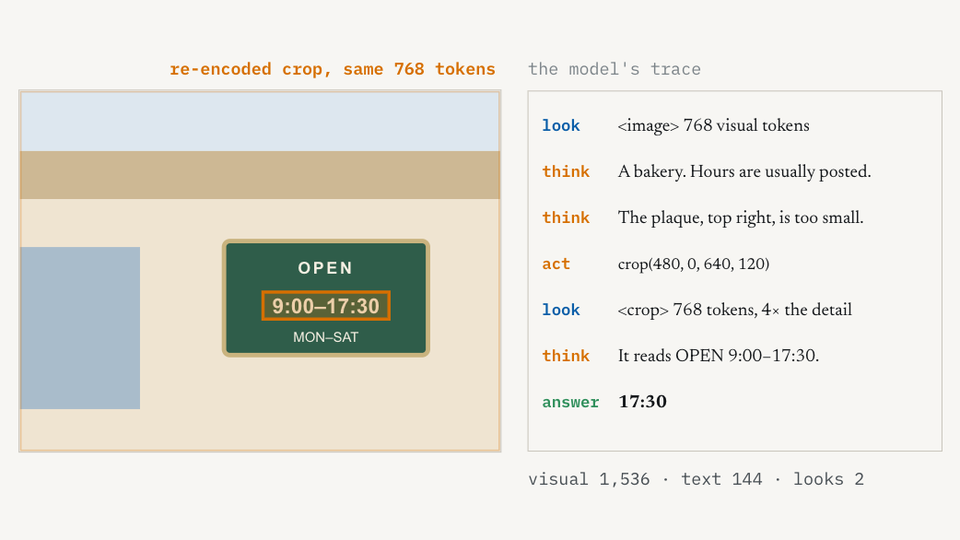
A reasoning trace beside a street photo: the model sees the opening-hours plaque is too small to read, crops the top-right corner, zooms in, reads 9:00 to 17:30 and answers 17:30.
Vision-language models · 13

Thinking With Images

Why a VLM that looks once cannot think its way back to lost pixels, and how zooming, visual search, verification and tools make perception a compute axis.
Published Updated 44 min read
Multimodal ReasoningTest-Time ComputeActive Perception
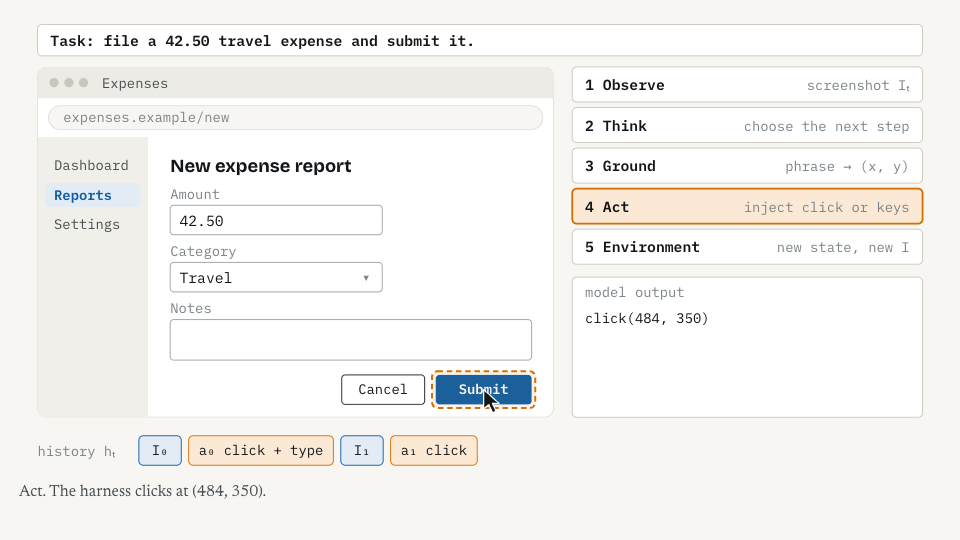
An agent on a mock expense form takes a screenshot, decides the next step, grounds Amount and Submit as screen coordinates, clicks and types, and a final check verifies the record.
Vision-language models · 14

VLMs That Act

What changes when a VLM's image is a screen it can change: observations, grounding as clicking, action spaces, trajectories, RL, evaluation and safety.
Published Updated 40 min read
GUI AgentsComputer UseVLMs
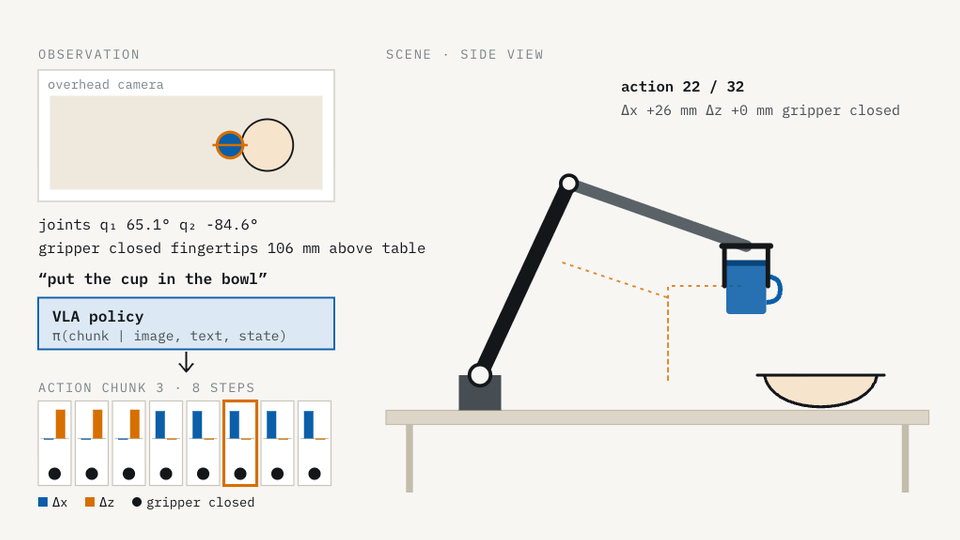
A two-link robot arm puts a cup in a bowl, driven by four chunks of eight actions, with the camera view, joint angles, instruction and each chunk shown alongside.
Vision-language models · 15

From VLMs to VLAs

How vision-language models become robot policies: action tokens, chunking, FAST, flow-matching experts, dual systems, data, RL and evaluation.
Published Updated 48 min read
Vision-Language-Action ModelsRobot LearningAction Representation
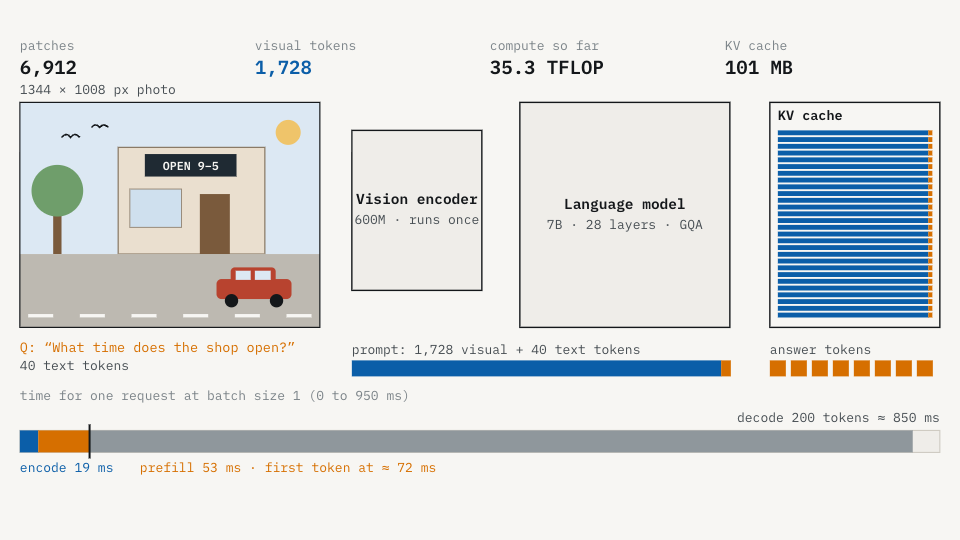
A 1344 by 1008 photo is cut into 6,912 patches, merged into 1,728 visual tokens, run through prefill, and leaves a 101 MB KV cache, while a timeline shows encode, prefill and decode time.
Vision-language models · 16

The Cost of a Picture

Where an image's inference cost goes in a vision-language model, and how token compression, small models, quantization and serving cut it.
Published Updated 42 min read
Inference EfficiencyToken CompressionVLMs
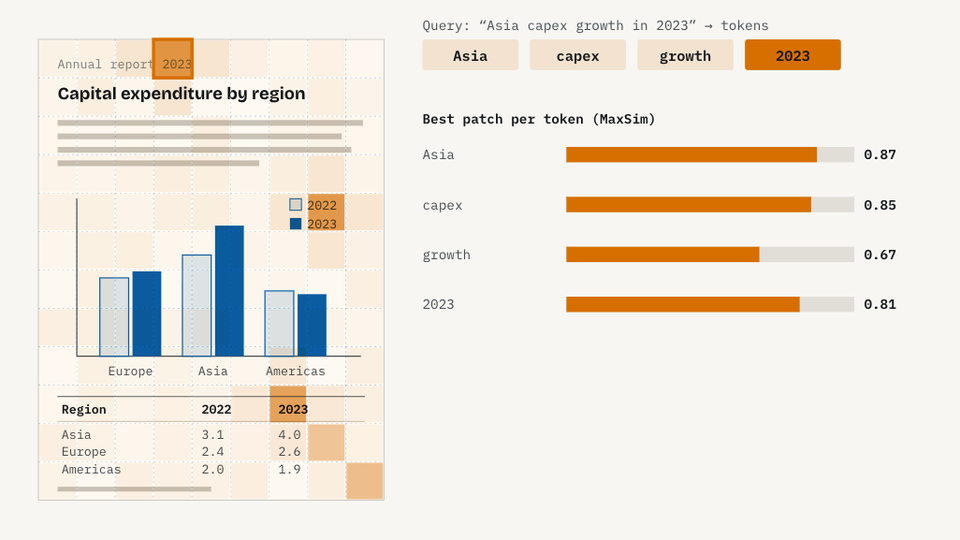
A report page cut into patches; for each query token the patches light up by similarity, the best patch is outlined, and its MaxSim score fills a bar until the page score is summed.
Vision-language models · 17

Searching With Pixels

How multimodal retrieval finds the right image, page or frame, from CLIP and VLM embedders to ColPali late interaction, rerankers and cited visual RAG.
Published Updated 43 min read
Multimodal RetrievalVisual RAGEmbedding Models
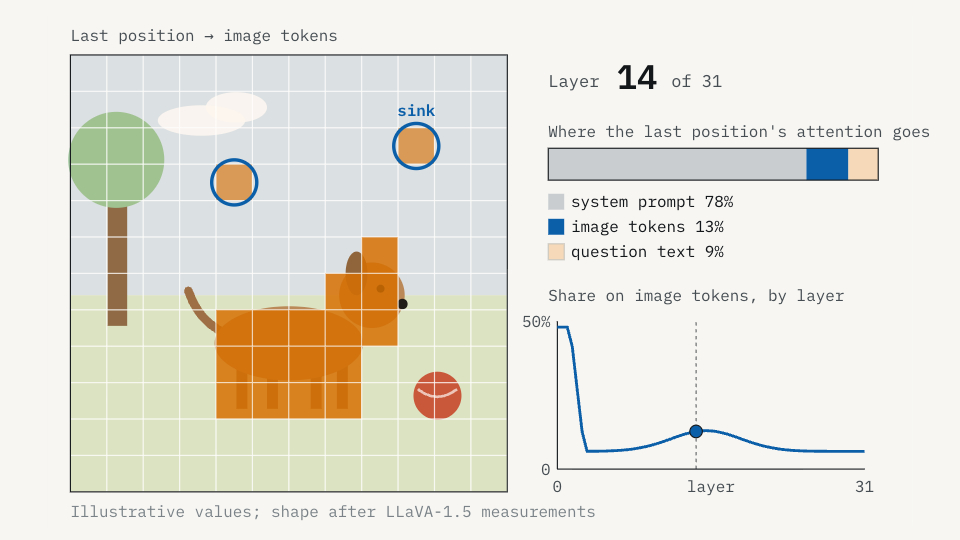
A patch grid over a drawn dog-and-ball scene shows where the answer position attends layer by layer: broad early attention, a collapse, a focus on the dog in middle layers, and sink tokens in deep layers.
Vision-language models · 18

What Happens Inside a VLM

How to look inside a vision-language model: which visual tokens it uses, where image information flows into the answer, and when it ignores the image.
Published Updated 44 min read
InterpretabilityVLMsHallucination
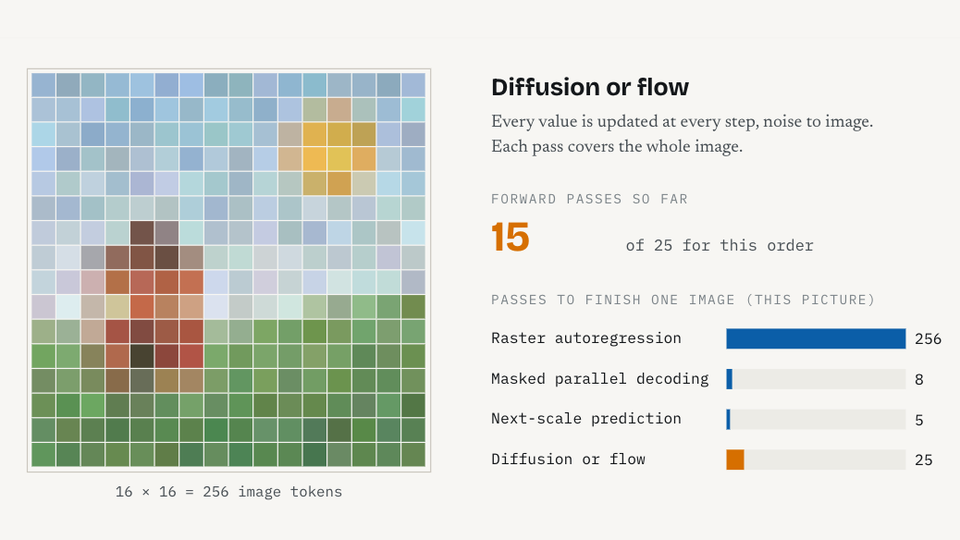
A small token image of a house drawn four ways: raster autoregression, masked parallel decoding, next-scale refinement and diffusion, with a counter of forward passes.
Vision-language models · 19

Models That See and Draw

How one model can both read and draw images: image tokenizers, meaning versus pixels, bridge, autoregressive and hybrid designs, and evidence on synergy.
Published Updated 44 min read
Unified Multimodal ModelsImage GenerationVisual Tokenizers
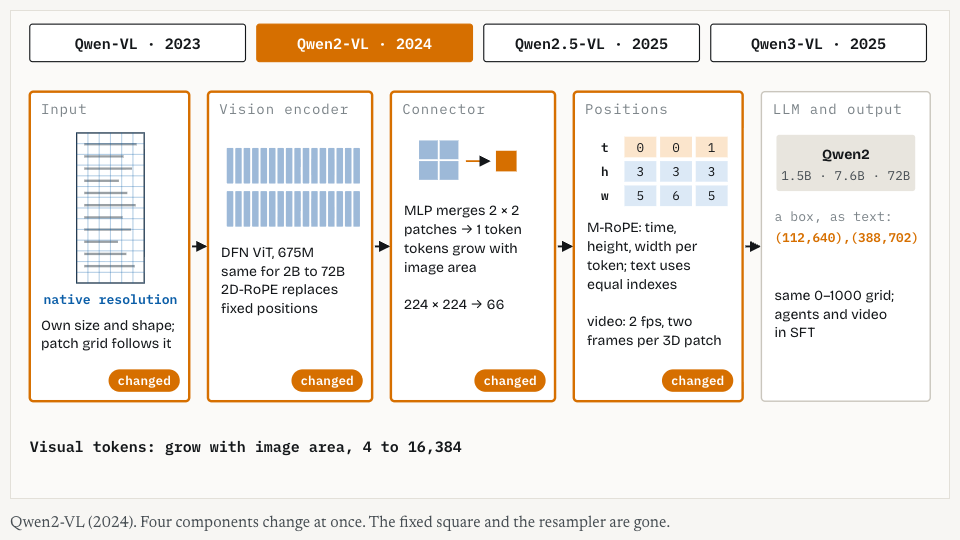
The Qwen-VL pipeline across four versions: the components that changed between Qwen-VL, Qwen2-VL, Qwen2.5-VL and Qwen3-VL light up in turn, ending in a one-table summary of every change.
Vision-language models · 20

How the Open VLM Families Were Built

A family-by-family survey of how open VLMs were built: data, encoders, resolution, training stages, RL, compute, and what actually drove capability.
Published Updated 52 min read
VLMsModel FamiliesTraining Recipes
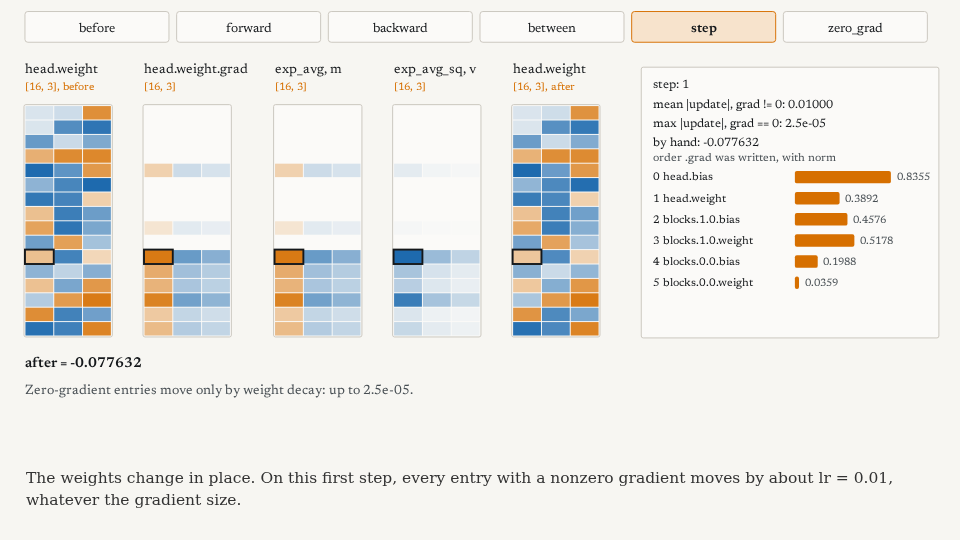
Animated preview of a figure from PyTorch From First Principles.
Coding tutorials · 01

PyTorch From First Principles

Build a neural network and its training loop from raw PyTorch: strides, broadcasting, autograd, losses, optimizers and hooks, each checked against torch.
Published Updated 68 min read
PyTorchAutogradTraining loops
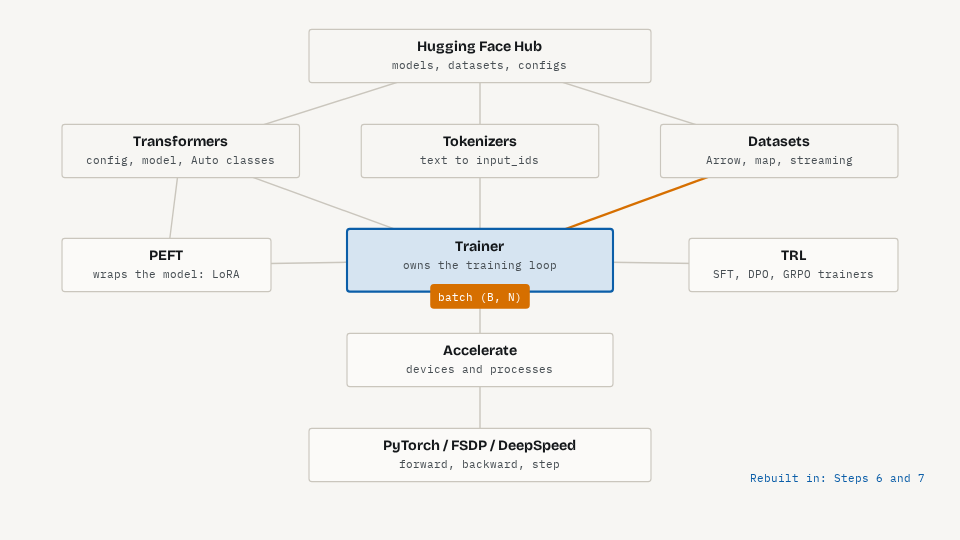
Animated preview of a figure from The Hugging Face Stack.
Coding tutorials · 02

The Hugging Face Stack

Run one training job through Transformers, Datasets, Trainer, Accelerate, PEFT and TRL, and check each layer against a raw PyTorch loop, number by number.
Published Updated 60 min read
Hugging FaceTraining loopsModel integration
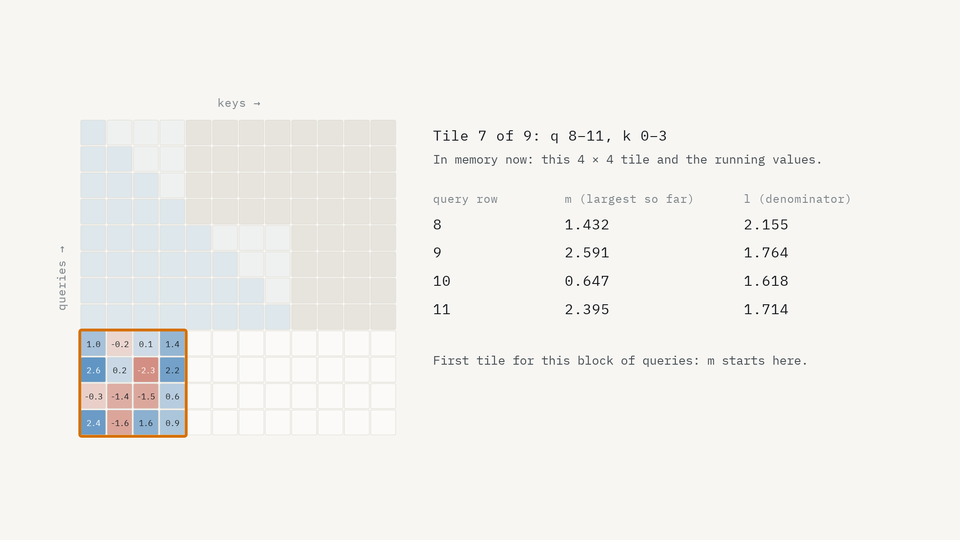
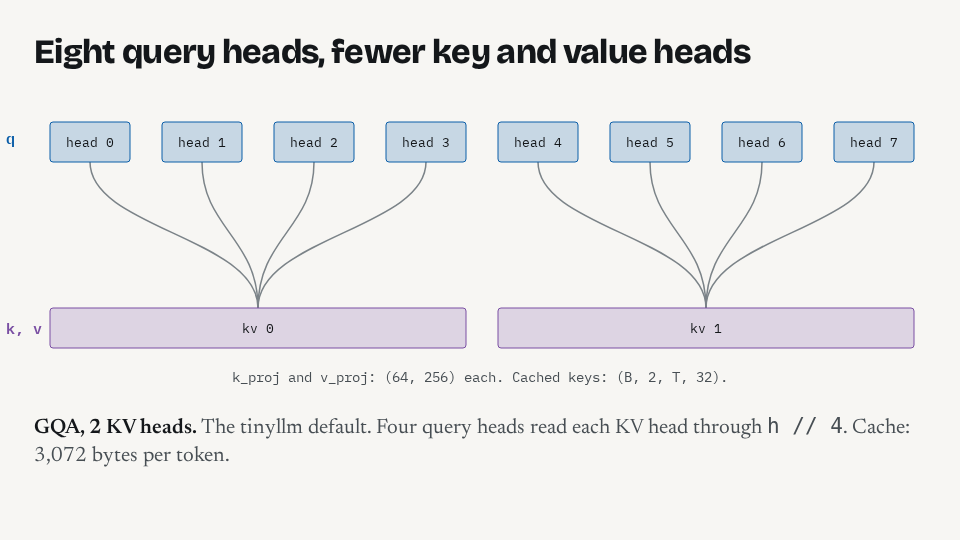
Animated preview of a figure from Build Attention From Scratch.
Coding tutorials · 03

Build Attention From Scratch

Build attention in PyTorch from one head to MHA, GQA, MLA and tiled online softmax, with tests against SDPA and measured benchmarks.
Published Updated 78 min read
AttentionKV cacheFlashAttention
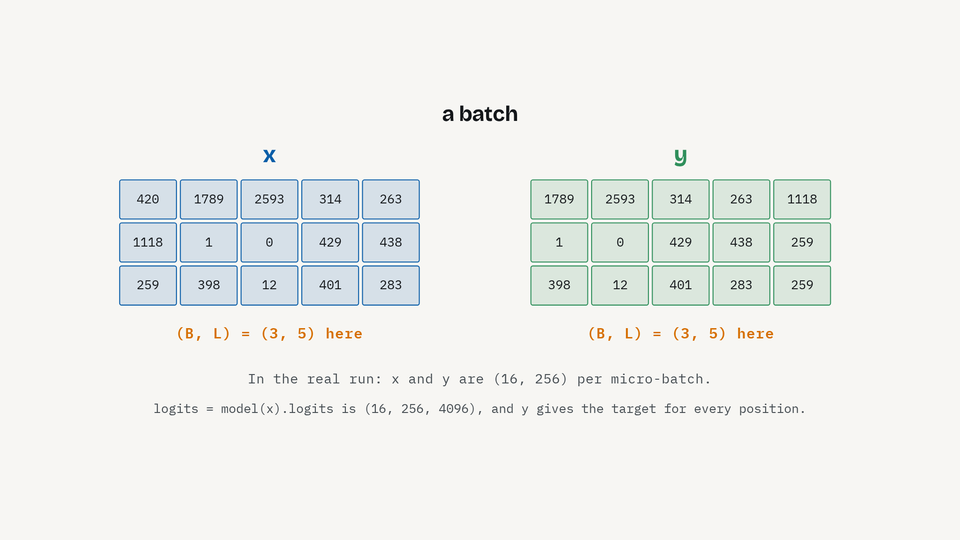
Animated preview of a figure from Build a Modern LLM From Scratch.
Coding tutorials · 04

Build a Modern LLM From Scratch

Build a Llama-style language model in PyTorch, step by step, inspect every tensor, then match Hugging Face logits and run real SmolLM2 weights.
Published Updated 43 min read
Language modelsPyTorchHugging Face
Animated preview of a figure from Train an LLM From Scratch.
Coding tutorials · 05

Train an LLM From Scratch

Build a complete LLM pretraining system in PyTorch, from raw text to token shards, a resumable loader, AdamW, accumulation, bf16, exact resume, MFU, DDP and failure guards.
Published Updated 55 min read
LLM pretrainingDistributed TrainingPyTorch
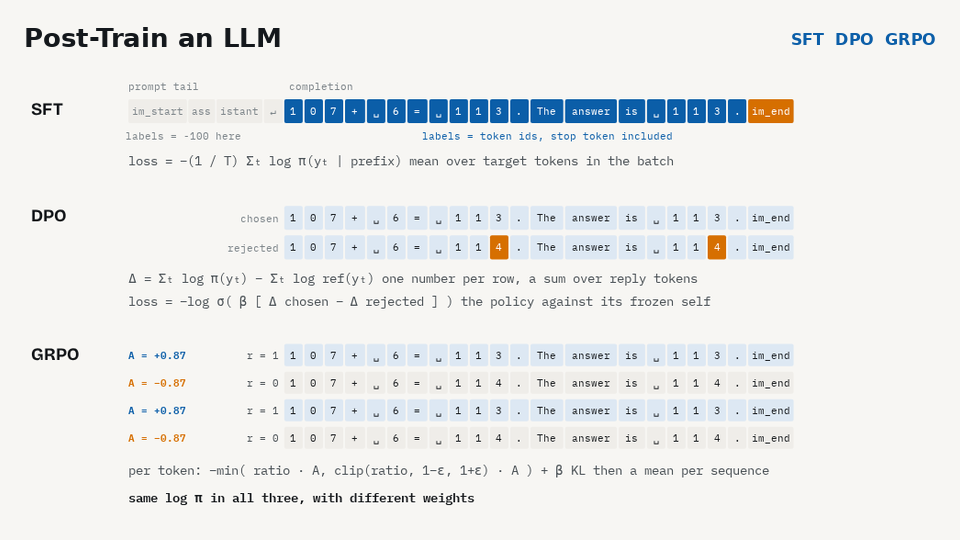
Animated preview of a figure from Post-Train an LLM.
Coding tutorials · 06

Post-Train an LLM

Take one pretrained model through SFT, DPO and GRPO. Write each loss by hand, inspect every mask, check most losses against TRL, PEFT and Hugging Face and the rest by hand, and break it on purpose.
Published Updated 85 min read
Supervised fine-tuningDPOGRPO
Animated preview of a figure from Build a Vision-Language Model From Scratch.
Coding tutorials · 07

Build a Vision-Language Model From Scratch

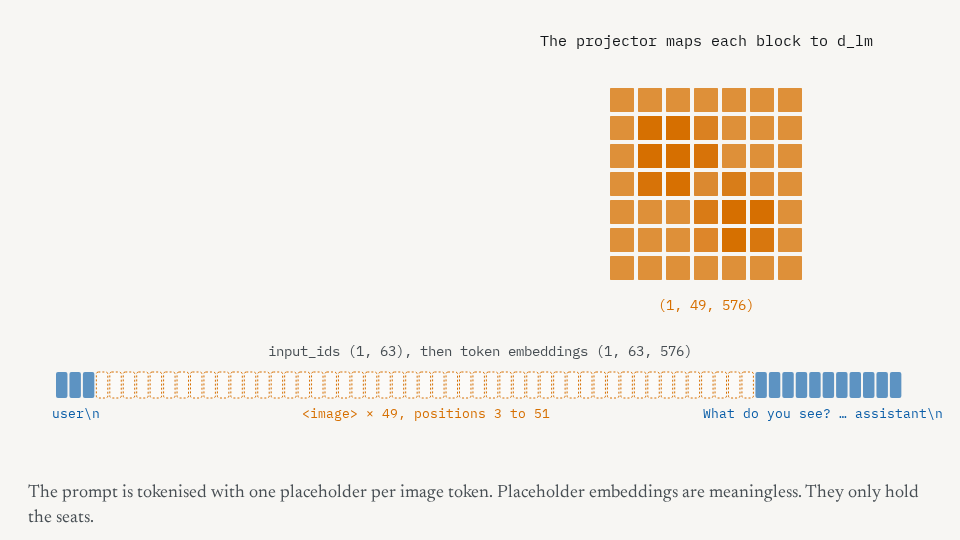
Assemble a working vision-language model from SigLIP and SmolLM2: image processor, projector, feature scattering, labels, masks, tiling, generation and save_pretrained, with every tensor inspected.
Published Updated 59 min read
Vision-language modelsPyTorchHugging Face
Animated preview of a figure from Train a Real VLM.
Coding tutorials · 08

Train a Real VLM

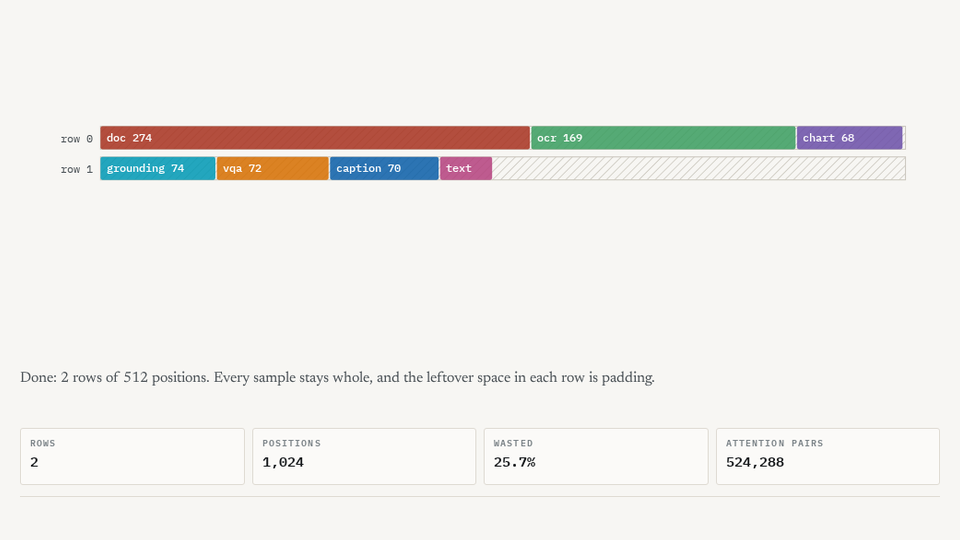
Train a vision-language model in code: projector alignment, multimodal pretraining, task mixtures, text replay, tiling, packing, LoRA placement, grounding and per-task evaluation.
Published Updated 55 min read
Vision-Language ModelsMultimodal TrainingTask Mixtures
Animated preview of a figure from Post-Train a VLM.
Coding tutorials · 09

Post-Train a VLM

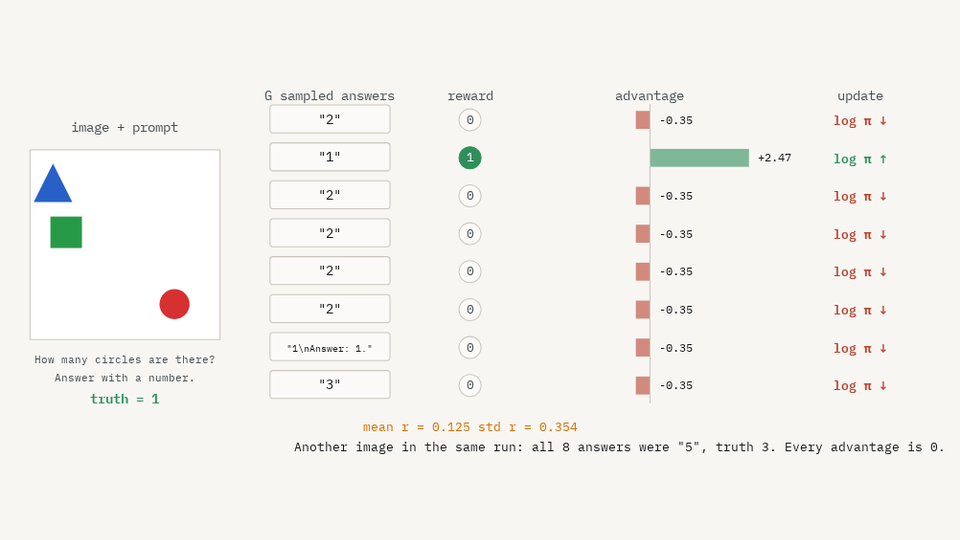
Post-train SmolVLM-256M in code: hallucination negatives on synthetic images, image-conditioned DPO, a blind-preference check, visual GRPO, freeze ablation and reward hacking.
Published Updated 45 min read
Vision-Language Modelsimage-conditioned DPOvisual GRPO
Animated preview of a figure from Build an Agent Harness From Scratch.
Coding tutorials · 10

Build an Agent Harness From Scratch

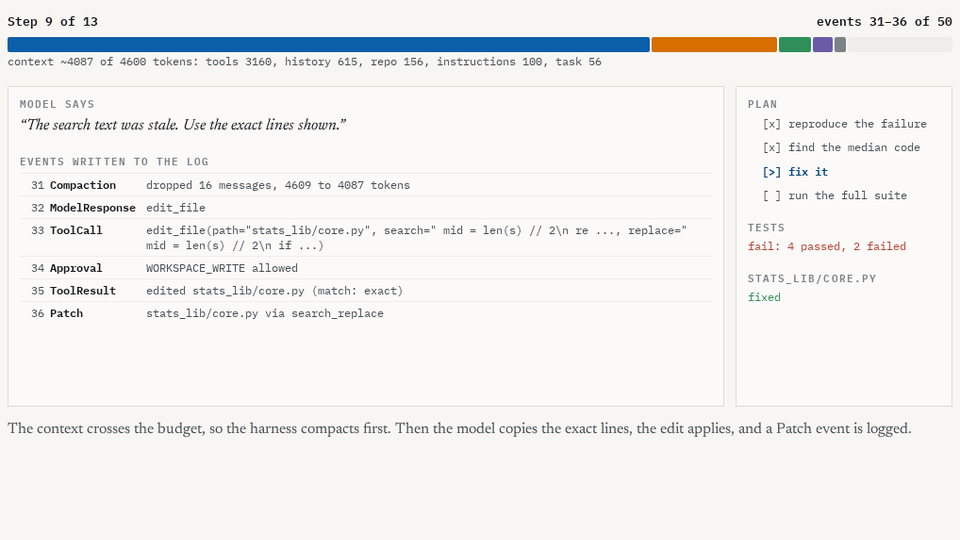
Build a coding agent from an eight-line loop: tools, validation, sandboxes, permissions, edit formats, compaction and an event log, each tested and measured.
Published Updated 50 min read
Coding agentsTool callingSandboxing
Animated preview of a figure from Add Memory and Context Engineering to the Agent.
Coding tutorials · 11

Add Memory and Context Engineering to the Agent

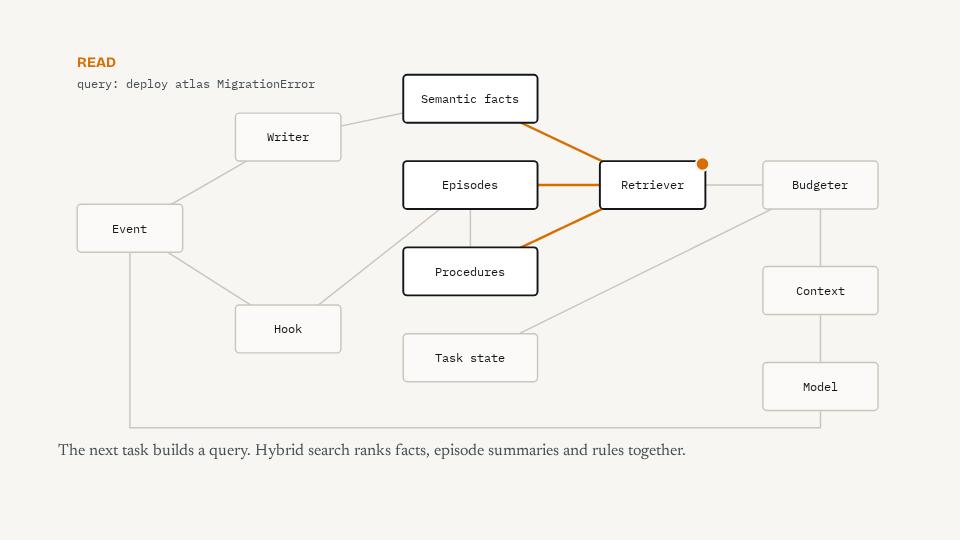
Give the C10 agent working, episodic, semantic and procedural memory, a token budget and compression, then test whether memory causally improves its work.
Published Updated 70 min read
Agent memoryContext engineeringHybrid retrieval
Animated preview of a figure from Train an Agent With Reinforcement Learning.
Coding tutorials · 12

Train an Agent With Reinforcement Learning

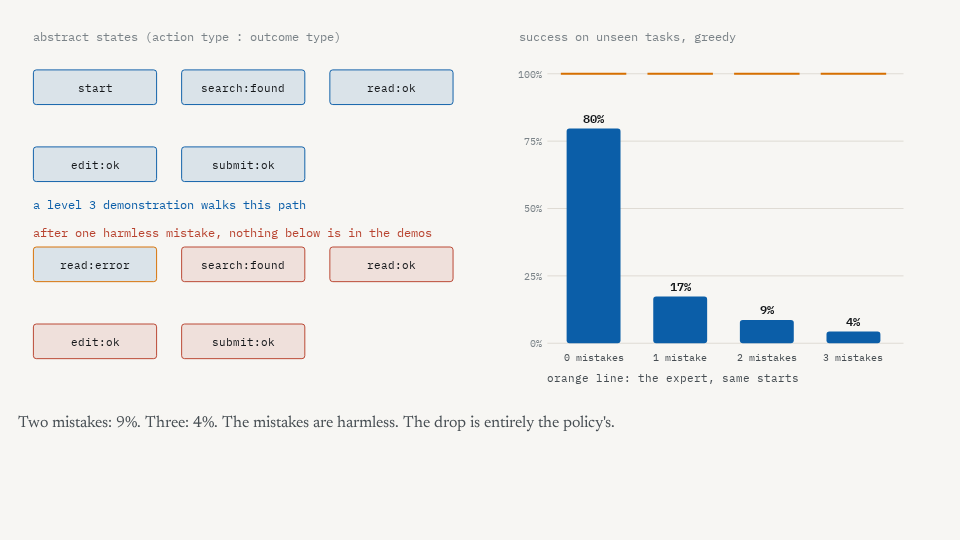
Build a filesystem environment, clone a scripted expert, watch distribution shift break it, then train the agent online with GRPO, real rewards and failure injection.
Published Updated 55 min read
Agent RLGRPOEnvironments
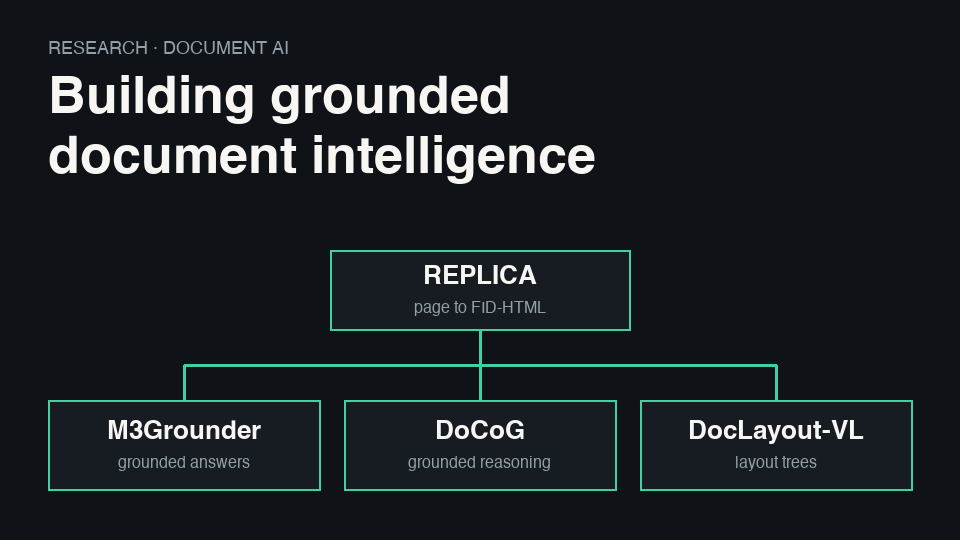
REPLICA at the top feeding three papers below it: M3Grounder, DoCoG and DocLayout-VL
Research · Document AI

Building Grounded Document Intelligence

A text representation of documents that loses nothing, and grounding with masks instead of typed coordinates by joining a VLM (what) and SAM (where) end to end, connected in a closed loop.
Published Updated 24 min read
Document AIGroundingVLMs
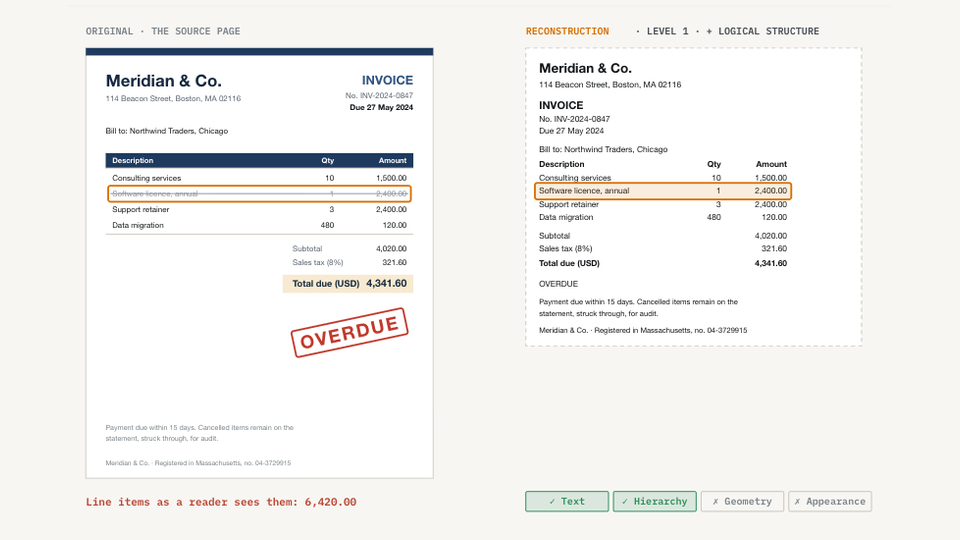
An invoice rebuilt from its source page one layer at a time: a wall of text, then headings and a table, then correct positions, then full styling with the strikethrough and the OVERDUE stamp.
Research · REPLICA · ICDAR 2026 Oral

REPLICA: Visually Faithful Document Reconstruction

Why converting a page to text loses information, and how REPLICA rebuilds it as faithful HTML with agents, checks the render, and generates training data.
Published Updated 38 min read
Document AIDocument ReconstructionAgentic Systems
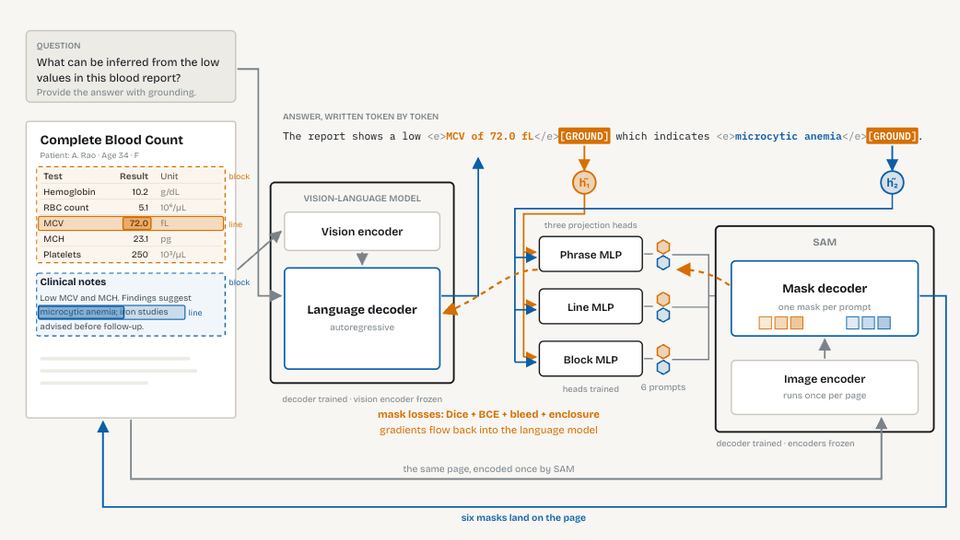
M3Grounder's forward pass: a VLM writes an answer with grounding tokens, three heads turn each token into phrase, line and block prompts, and SAM decodes masks onto a blood report.
Research · M3Grounder · CVPR 2026

Grounding Document Answers With Masks

M3Grounder grounds document answers as pixel masks: a VLM writes a token per cited span and SAM draws phrase, line and block masks, trained end to end.
Published Updated 36 min read
Document AIVisual GroundingSegmentation
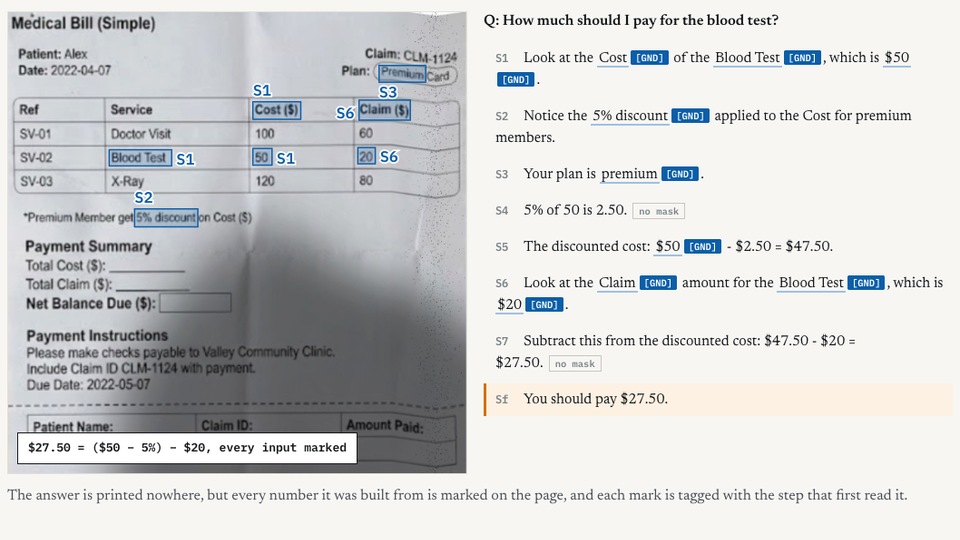
A grounded chain of thought on a photographed medical bill: each reasoning step highlights the cells it read, ending with every input to the 27.50 dollar answer marked on the page.
Research · DoCoG · ECCV 2026 Spotlight

Grounding Every Step of a Document Answer

DoCoG grounds every step of a document chain of thought with pixel masks, using a module between the language model and SAM and mask-safe preference training.
Published Updated 38 min read
Document AIGrounded ReasoningVLMs
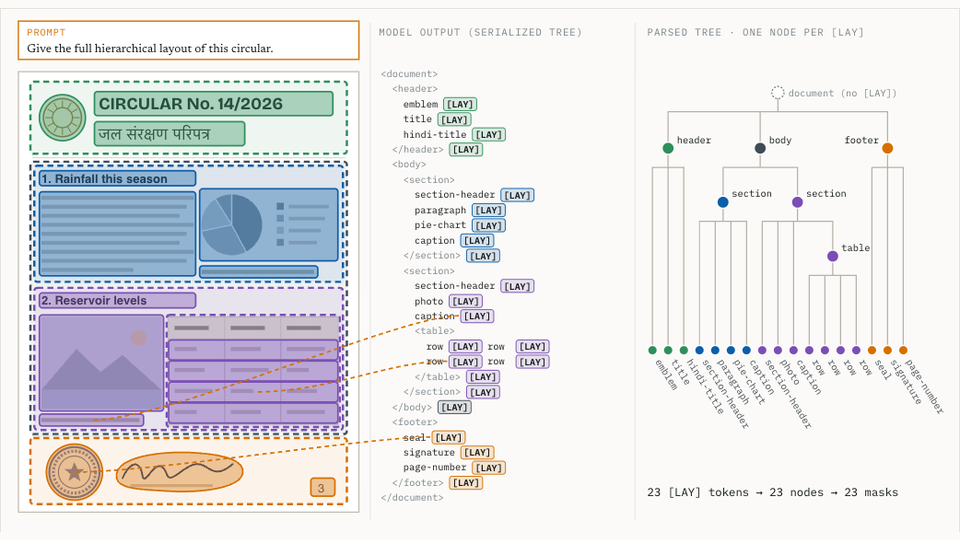
A language model writes a government circular's layout as tagged text; each layout token becomes a coloured mask on the page and a node in a growing layout tree.
Research · DocLayout-VL · ECCV 2026

DocLayout-VL: Hierarchical, Open-Set, Promptable Document Layout Segmentation

DocLayout-VL treats layout as a tree of masks: a VLM writes the tree, HGC attends along it, SAM draws each region, in any vocabulary.
Published Updated 34 min read
Document AILayout AnalysisSegmentation
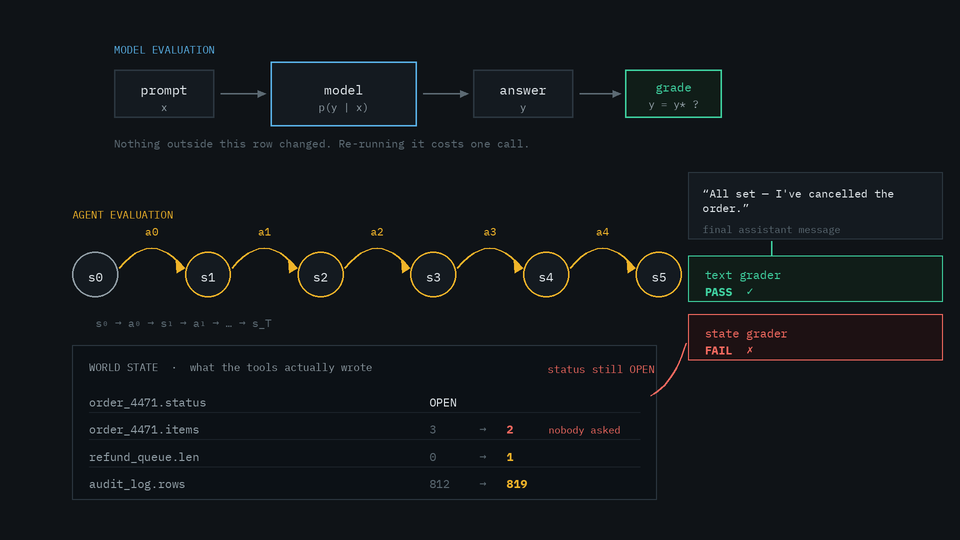
Animated comparison between grading an agent's words and verifying the world state it changed.
Tool Use & Agentic Models · 07

The Agent Evaluation Playbook

How to evaluate trajectories, state changes, reliability, safety, graders, budgets, and long-horizon failures.
Published Updated 54 min read
Agent EvaluationReliabilitySafety
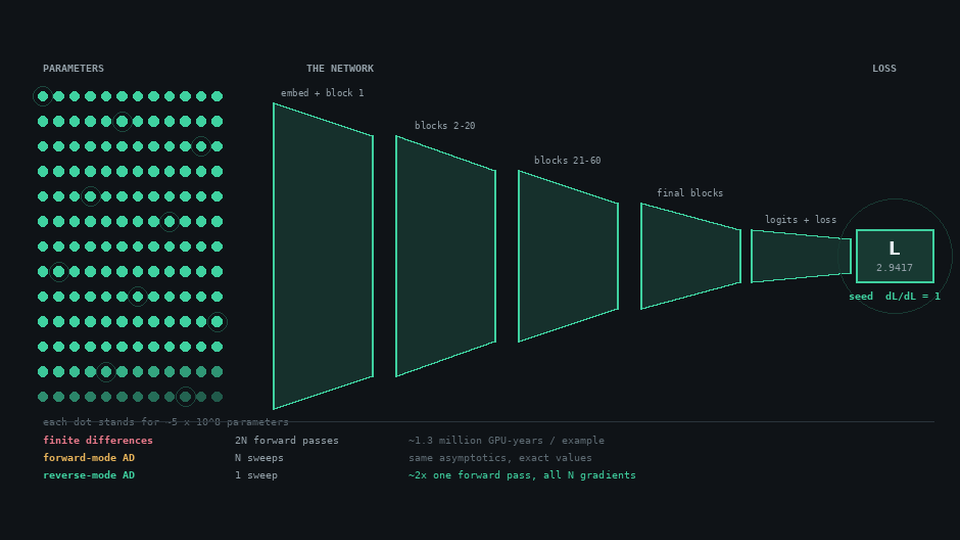
Animated reverse-mode gradient wave flowing from one scalar loss to a grid of parameters.
Deep Learning Foundations · 06

What Autograd Actually Does

Backpropagation and autograd from scalar chain rules to Jacobian products, saved tensors, and checkpointing.
Published Updated 46 min read
BackpropagationAutogradVJPs
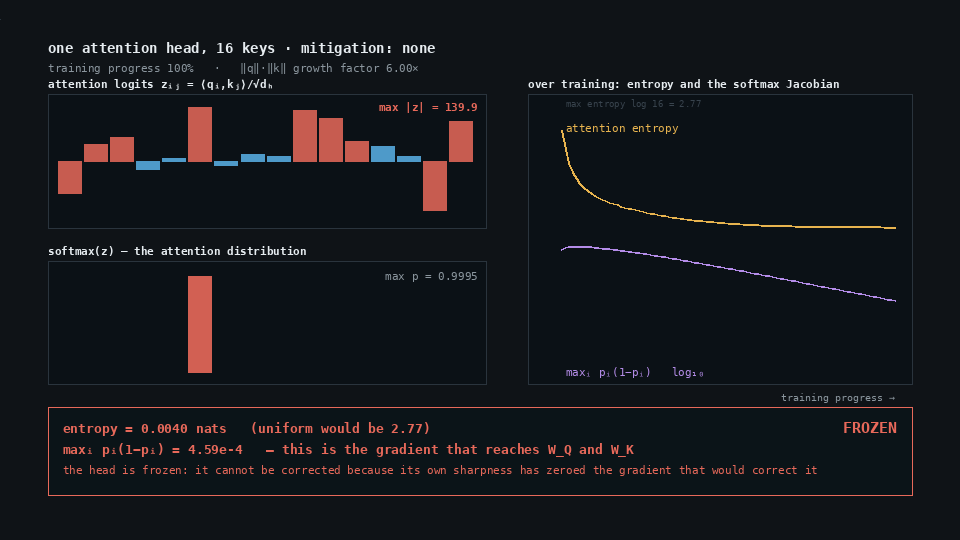
Animated attention distribution showing entropy collapse as logits grow during unstable training.
Deep Learning Foundations · 07

Why Transformers Do Not Explode

Initialization, residual paths, normalization, optimizer dynamics, precision, and the signatures of unstable training.
Published Updated 54 min read
InitializationTraining StabilityNumerics
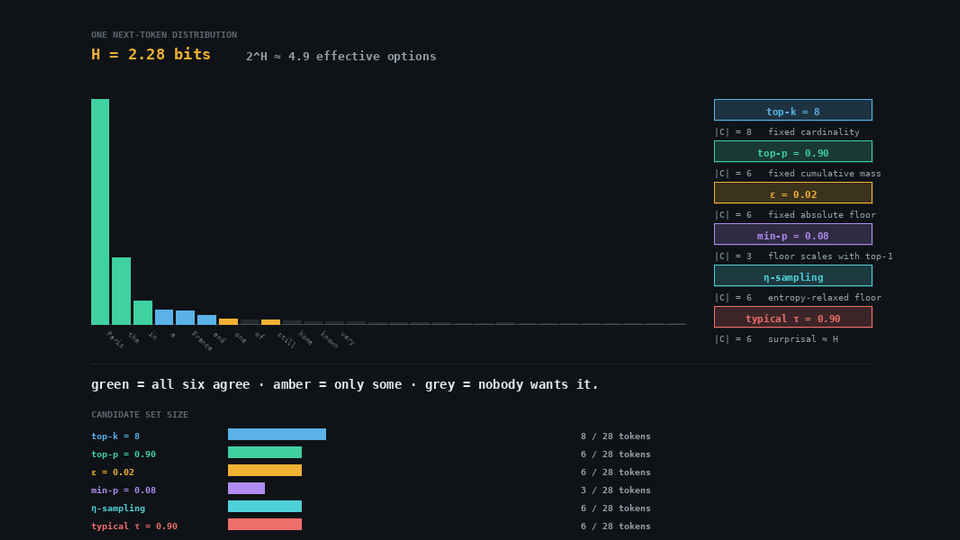
Animated comparison of top-k, top-p, epsilon, min-p, eta, and typical sampling.
Deep Learning Foundations · 08

Choosing the Next Token

Temperature, search, truncation, penalties, grammars, and contrastive generation organized around entropy.
Published Updated 48 min read
DecodingSamplingInformation Theory
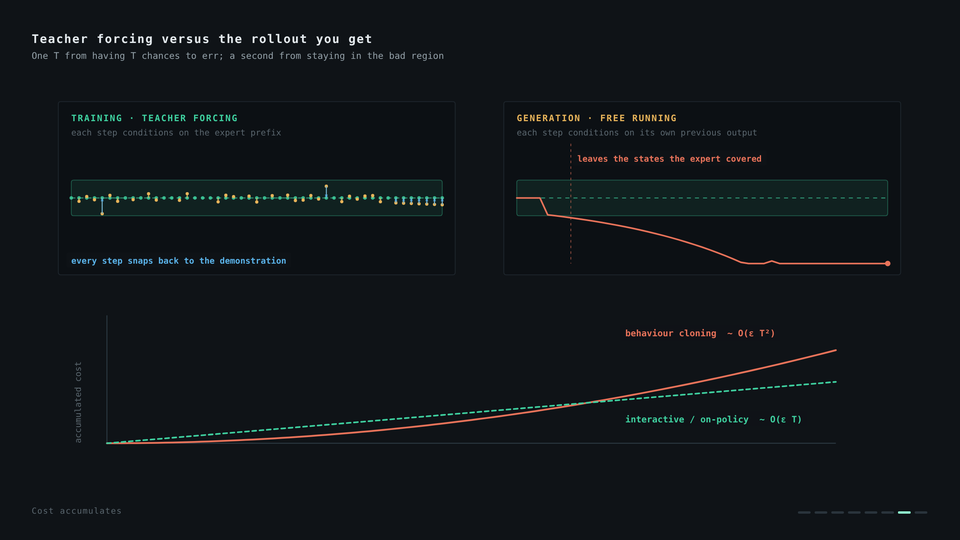
Animated contrast between teacher-forced demonstrations and a model's compounding rollout errors.
Post-training · 01

Teaching a Language Model to Follow Instructions

Supervised fine-tuning as behavior cloning: data construction, loss masking, distribution shift, and capability change.
Published Updated 54 min read
SFTInstruction TuningBehavior Cloning
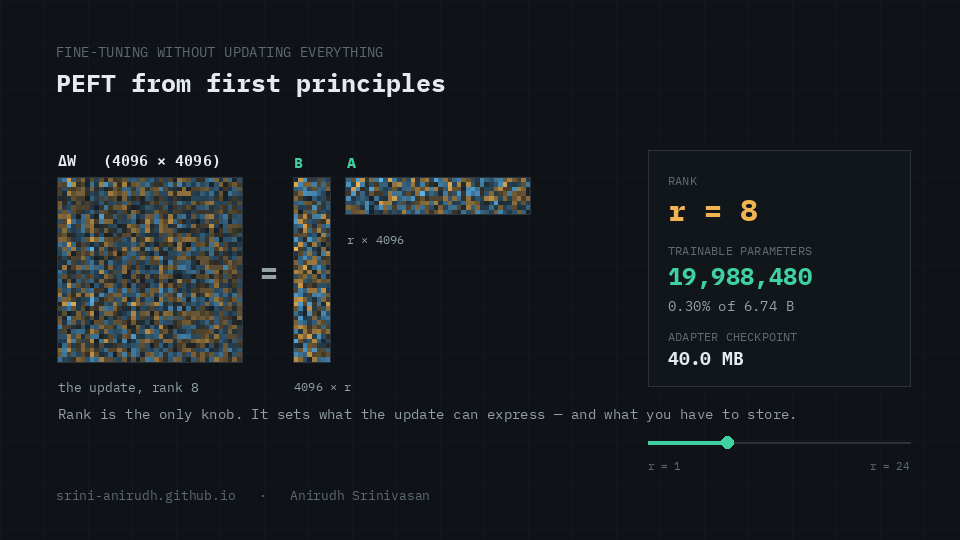
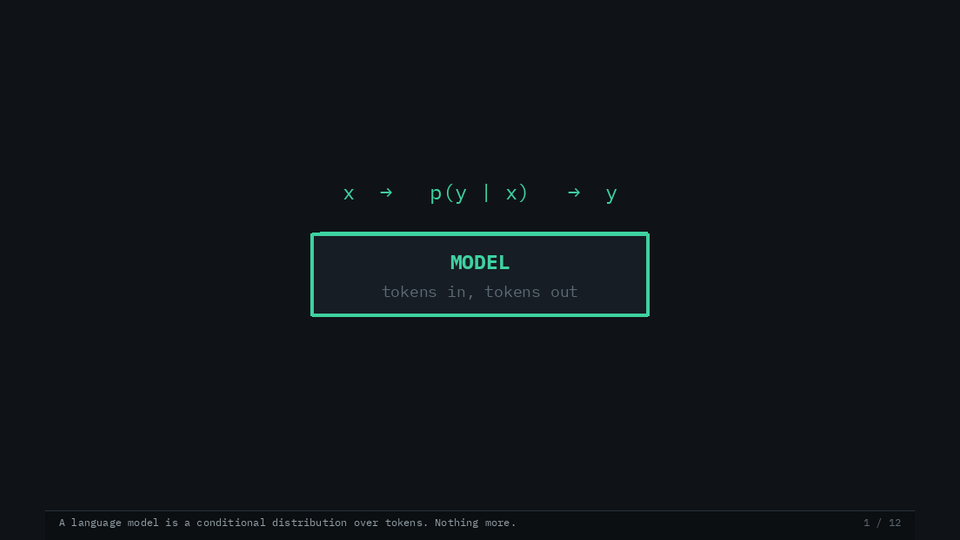
Animated low-rank factorization showing how LoRA rank changes trainable parameters and approximation capacity.
Post-training · PEFT companion

How LoRA Changes a Model Without Rewriting It

Why low-rank updates work, how LoRA and QLoRA spend memory, and when adapters lose to full fine-tuning.
Published Updated 46 min read
LoRAQLoRAAdapters
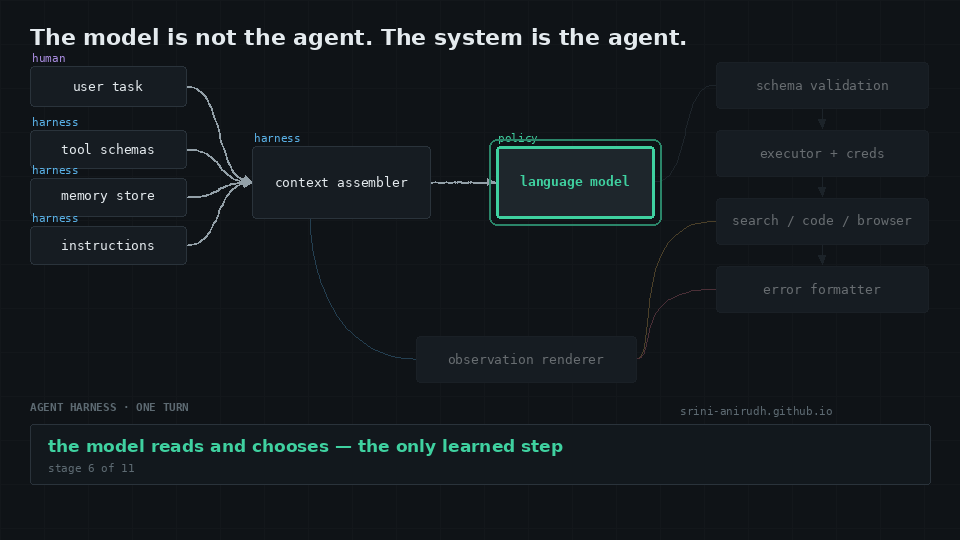
Animated agent harness expanding around the model into context, tools, sandboxing, verification, memory, and logs.
Tool Use & Agentic Models · 03

Inside an AI Agent Harness

The agent harness as a system: context assembly, action protocols, verification, containment, budgets, and event state.
Published Updated 72 min read
Agent HarnessesSandboxingVerification
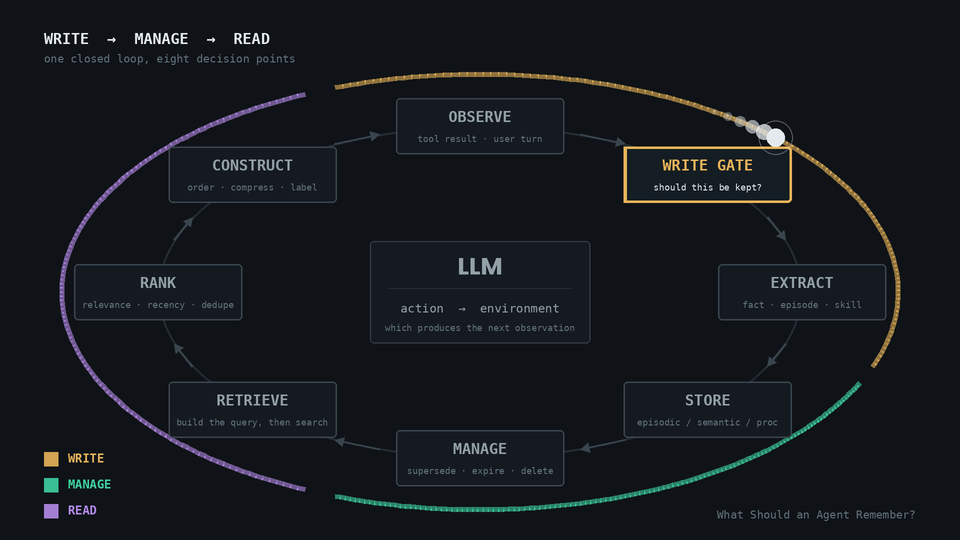
Animated agent memory loop covering write, manage, retrieve, rank, and context construction.
Tool Use & Agentic Models · 04

Memory Is More Than Context

Working, episodic, semantic, procedural, and reflective memory as one bounded context-allocation problem.
Published Updated 58 min read
Agent MemoryContext EngineeringRetrieval
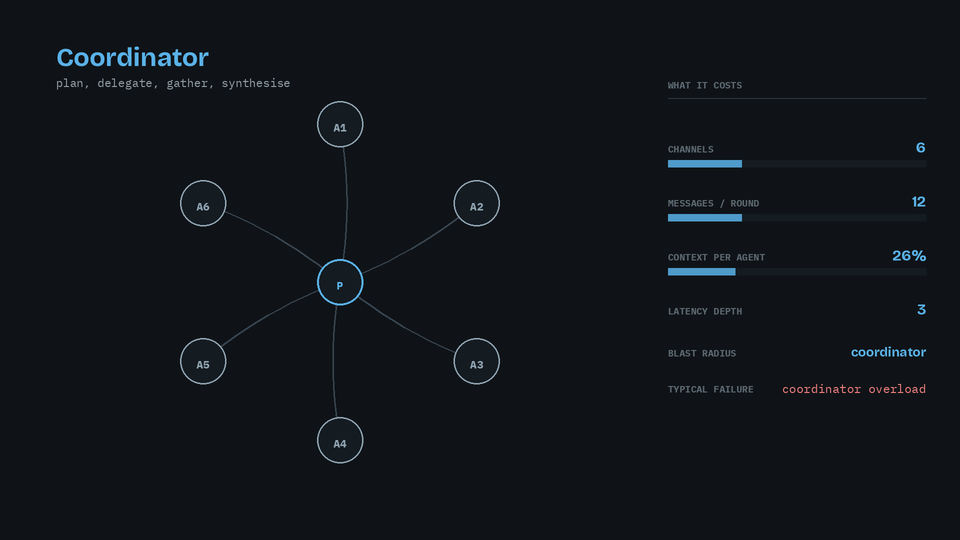
Animated seven-agent network comparing pipeline, coordinator, hierarchy, mesh, and blackboard topologies.
Tool Use & Agentic Models · 05

How Multi-Agent Systems Actually Coordinate

When multiple agents beat one: diversity, specialization, topology, communication cost, orchestration, and failure modes.
Published Updated 48 min read
Multi-Agent SystemsOrchestrationCoordination
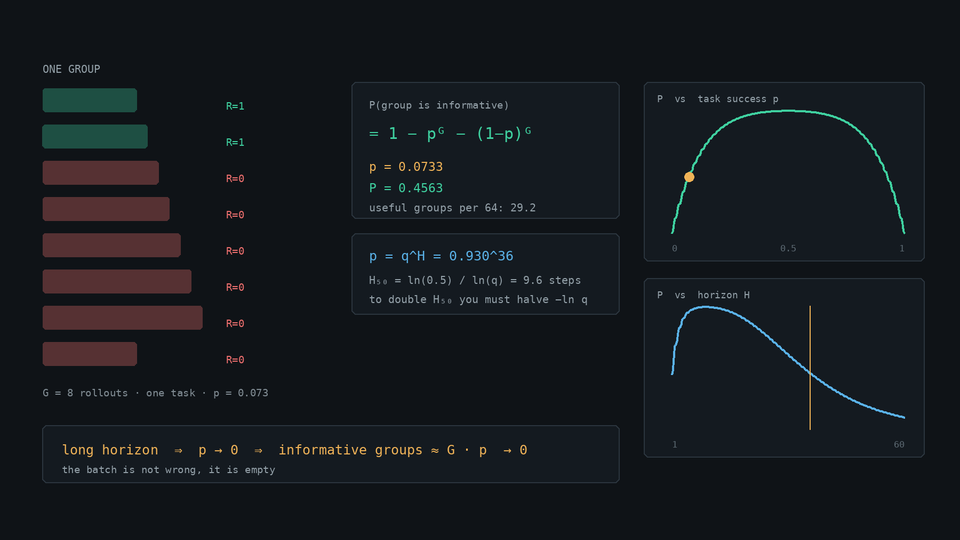
Animated rollout batch losing useful gradient signal as task horizon increases.
Tool Use & Agentic Models · 06

Reinforcement Learning for Agents From First Principles

Reinforcement learning for agents: environments, reward design, credit assignment, horizons, and rollout systems.
Published Updated 62 min read
Agentic RLCredit AssignmentEnvironments
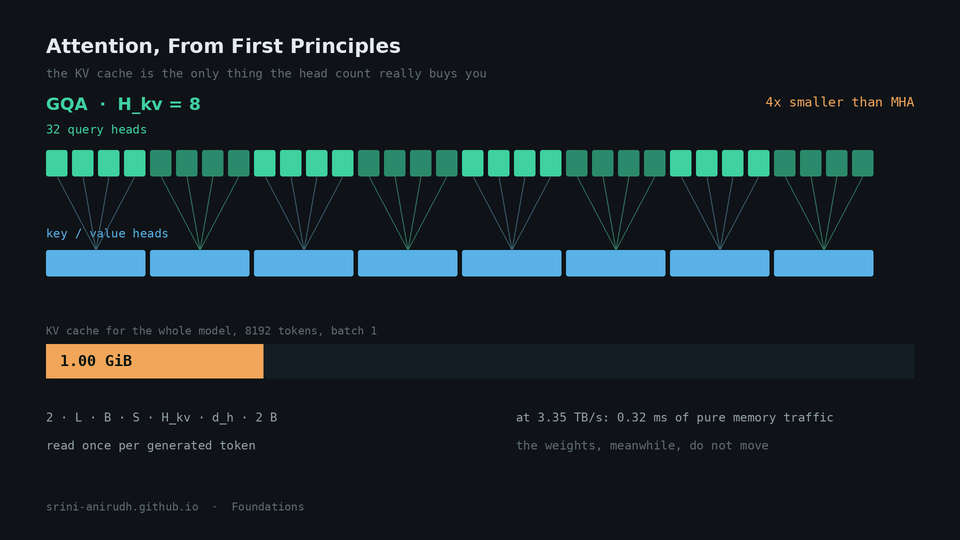
Animated attention map showing a token construct its representation by weighting information from other positions.
Deep Learning Foundations · 03

How Attention Moves Information

Why attention exists, how Q, K, and V arise, and how the same operation becomes MHA, GQA, sliding windows, linear attention, MLA, and multimodal attention.
Published Updated 52 min read
AttentionQKVGQA & MLA
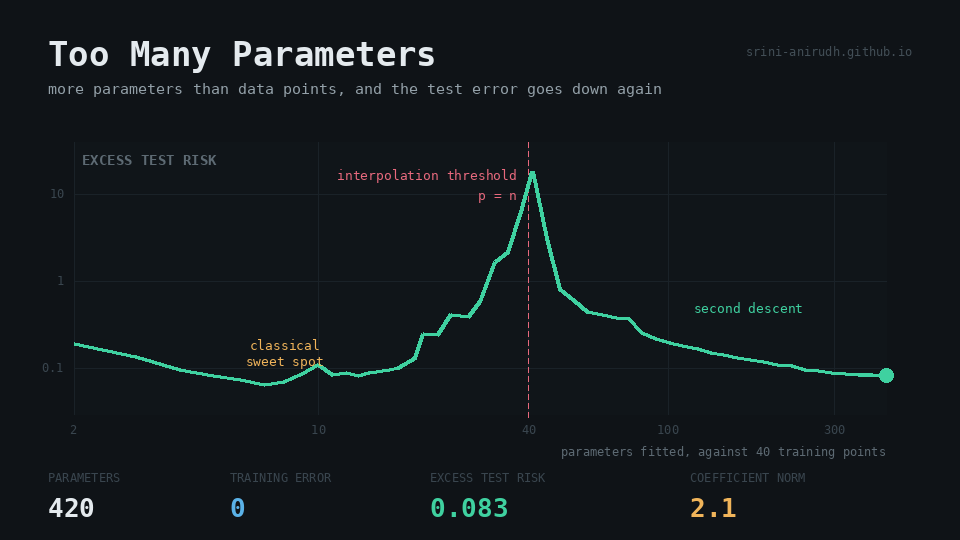
Animated double-descent curve crossing the interpolation threshold as parameter count increases.
Training Science · Generalization

The Puzzle of Overparameterization

Interpolation, double descent and its limits, benign overfitting, implicit bias, function space, grokking, and what any of them explain about LLMs.
Published 52 min read
GeneralizationDouble DescentGrokking
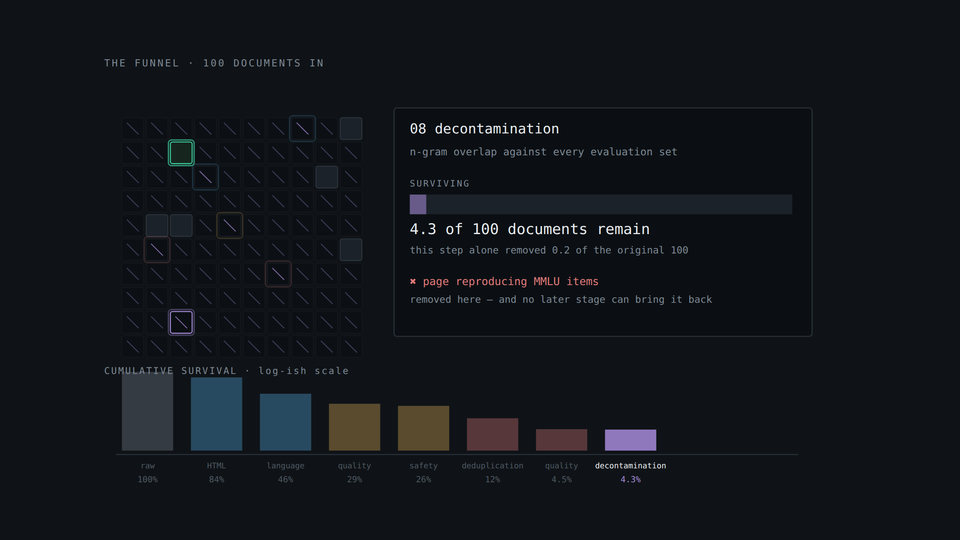
Animated curation funnel thinning a raw document collection through filtering, deduplication, and decontamination.
Training Science · Pretraining Data

How LLMs Are Pretrained

Where pretraining data comes from, what survives curation, how mixtures and sequences are constructed, and how teams decide whether the recipe worked.
Published Updated 52 min read
PretrainingData CurationTokenization
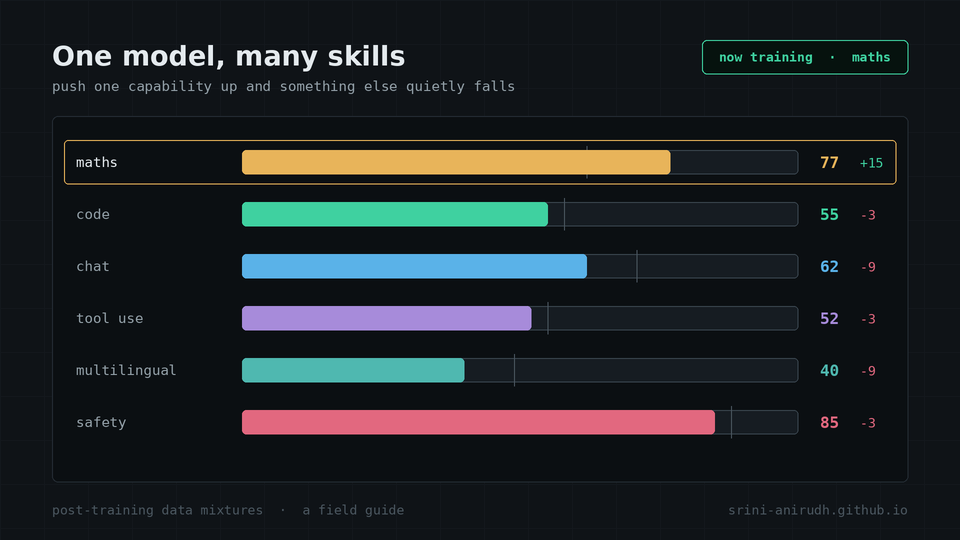
Animated capability scoreboard showing one trained skill rise while other model skills regress.
Post-training · 02

Mixing Data Without Losing Capabilities

Why tasks interfere, how sampling weights become loss weights, how to measure transfer, and what to do when a capability regresses.
Published Updated 44 min read
Data MixturesMulti-task LearningForgetting
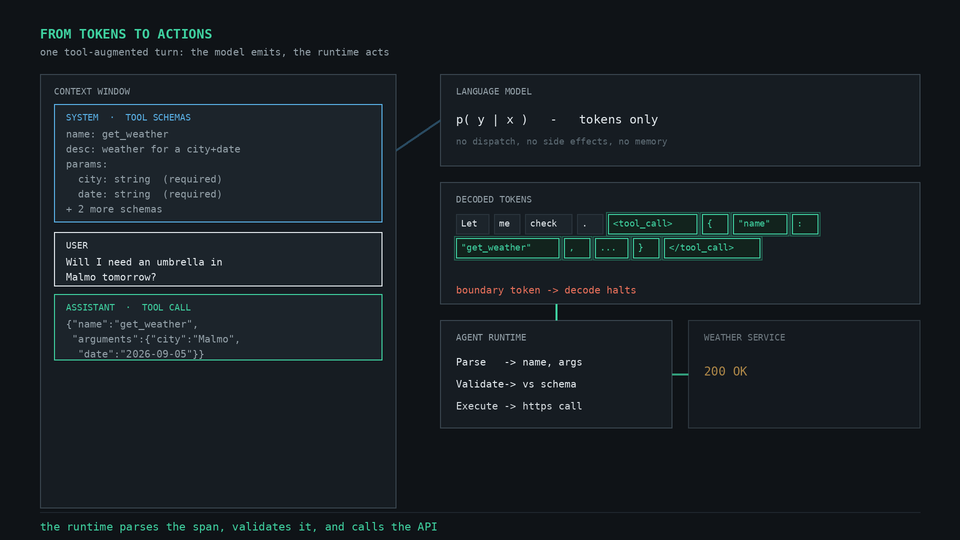
Animated tool-augmented turn from injected schemas through structured decoding, execution, observation, and final response.
Tool Use & Agentic Models · 01

How Language Models Learn to Use Tools

How models discover available tools at runtime, decide whether to call one, produce valid arguments, retrieve schemas, and learn from executable feedback.
Published 42 min read
Function CallingTool RetrievalVerification
Animated agent harness cycling through context assembly, model action, validation, execution, observation, and persistent state.
Tool Use & Agentic Models · 02

The Making of an AI Agent

What changes when tool calls become a stateful loop: trajectory data, imitation versus RL, long-horizon credit assignment, memory, harnesses, and environments.
Published Updated 34 min read
AgentsTrajectoriesEnvironment RL
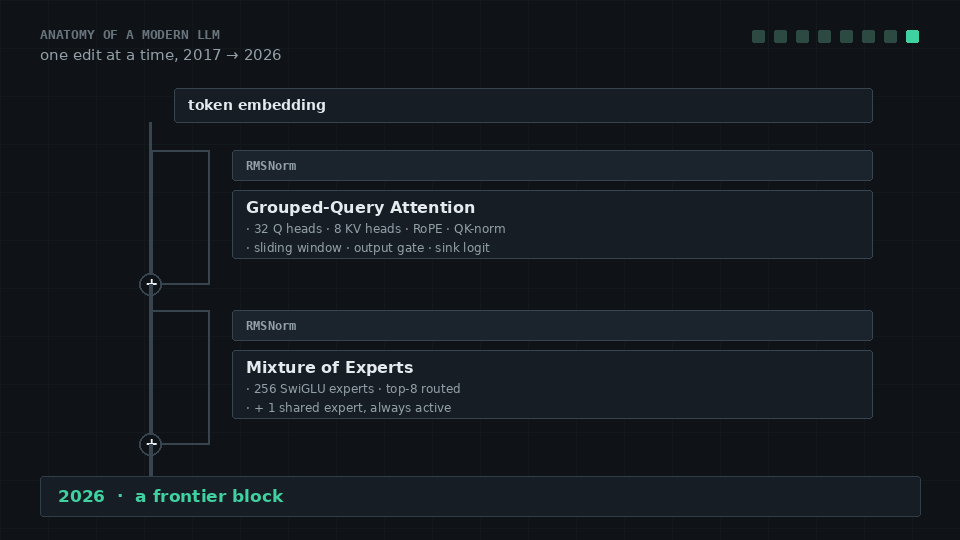
Animated Transformer decoder block evolving from the 2017 design into a modern LLM block.
Architectures · Modern LLMs

What Changed Inside the Transformer?

What changed between the original Transformer and today’s Llama, Qwen, DeepSeek, and GLM-class models—one design pressure at a time.
Published Updated 52 min read
TransformersArchitectureKV Cache
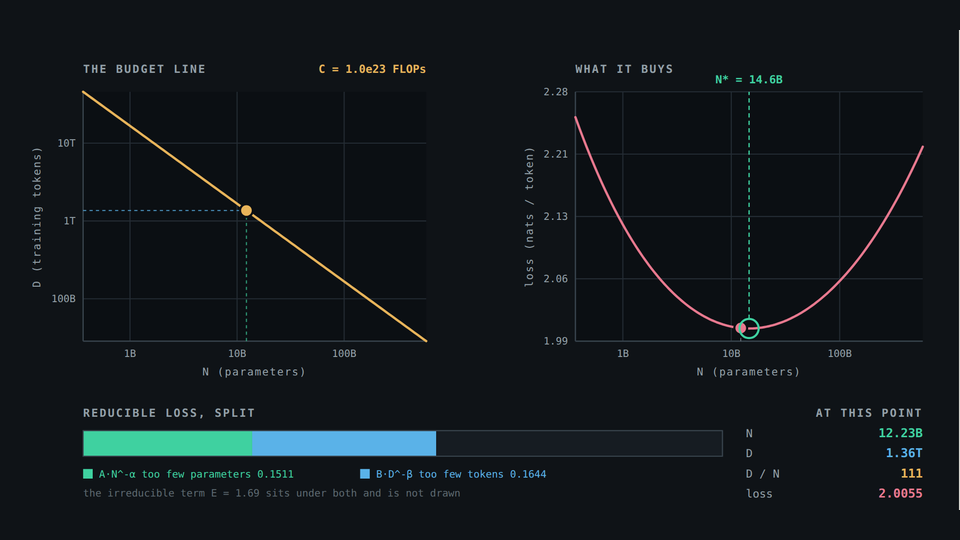
Animated fixed-compute frontier trading model parameters against training tokens while loss traces a shallow valley.
Training Science · Scaling Laws

Scaling Laws from First Principles

Where C = 6ND comes from, why tokens per parameter is not a constant, and how to plan a large run from small experiments.
Published Updated 39 min read
Scaling LawsChinchillaCompute
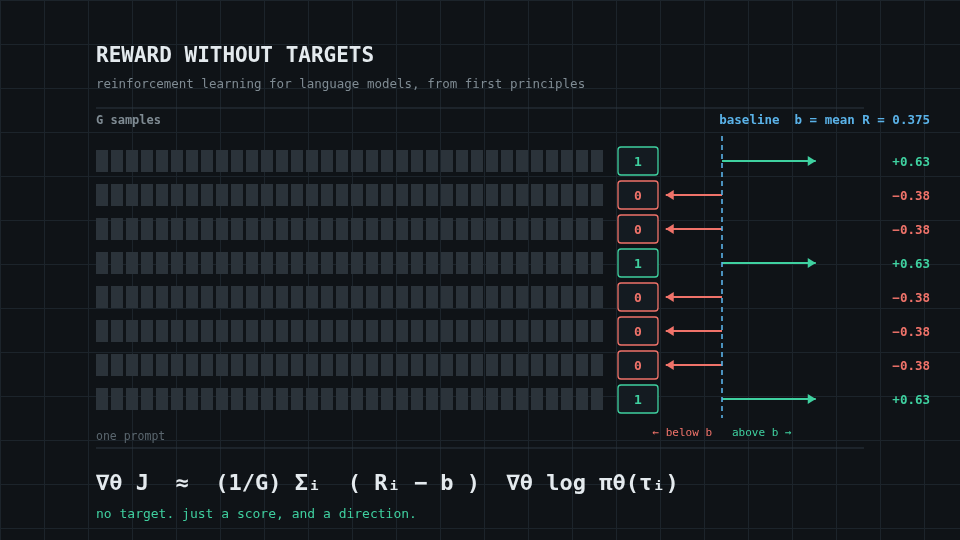
Animated sampled answers receiving binary rewards and advantages around the group mean.
Post-training · 04

Reinforcement Learning from First Principles

Policy gradients, baselines, advantages, GAE, trust regions, and PPO derived first, then translated into language-model rollouts.
Published Updated 58 min read
Reinforcement LearningPolicy GradientsPPO
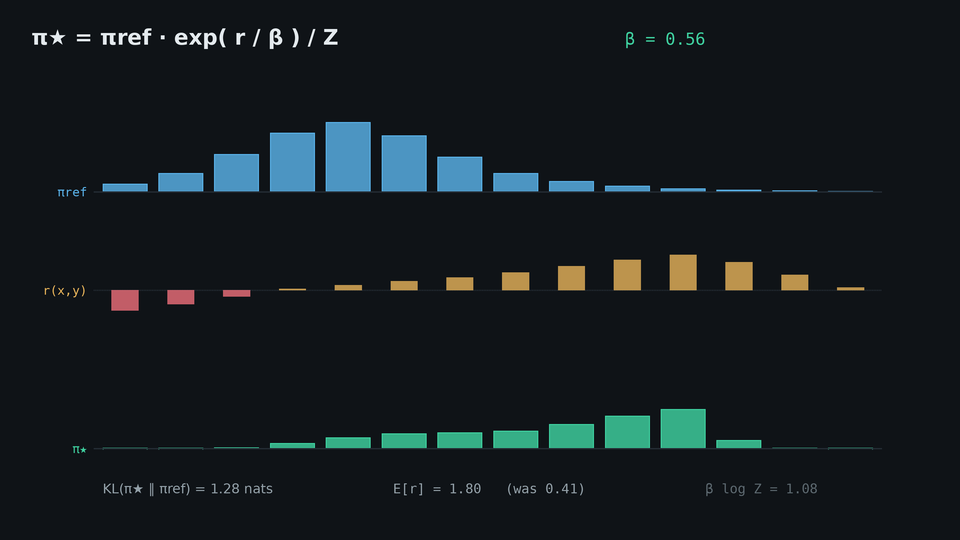
Animated KL-temperature sweep moving a policy from its reference distribution toward higher-reward completions.
Post-training · 03

Teaching a Model What We Prefer

How comparisons become reward, why RLHF needs a KL leash, and how the same objective turns into DPO’s direct loss.
Published Updated 54 min read
RLHFDPOPreference Learning
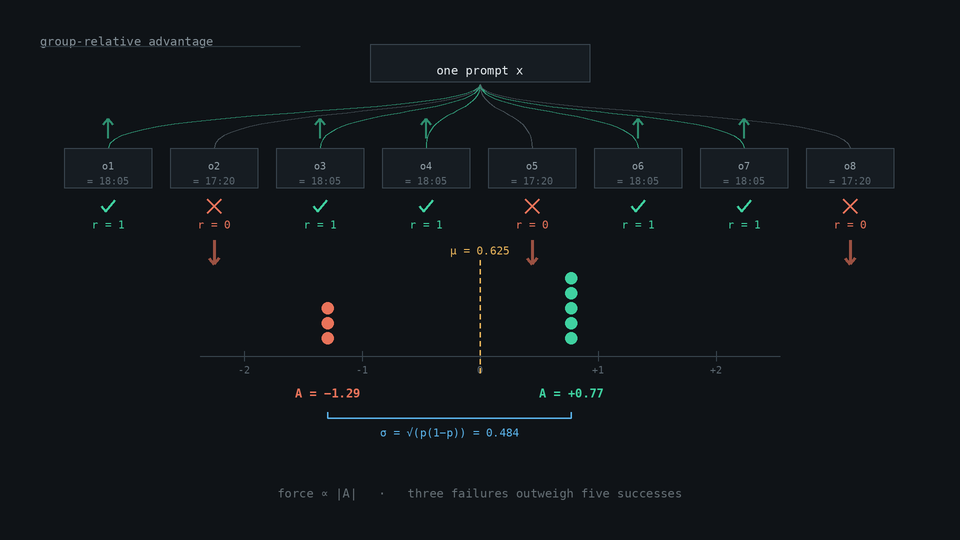
Animated group of reasoning rollouts receiving verifiable rewards and normalized relative advantages.
Reasoning Models · RLVR

How Reinforcement Learning Teaches Models to Reason

What changes when answers can be checked automatically: verifiers, GRPO, DeepSeek-R1, exploration, and the limits of short RL runs.
Published Updated 46 min read
RLVRGRPODeepSeek-R1
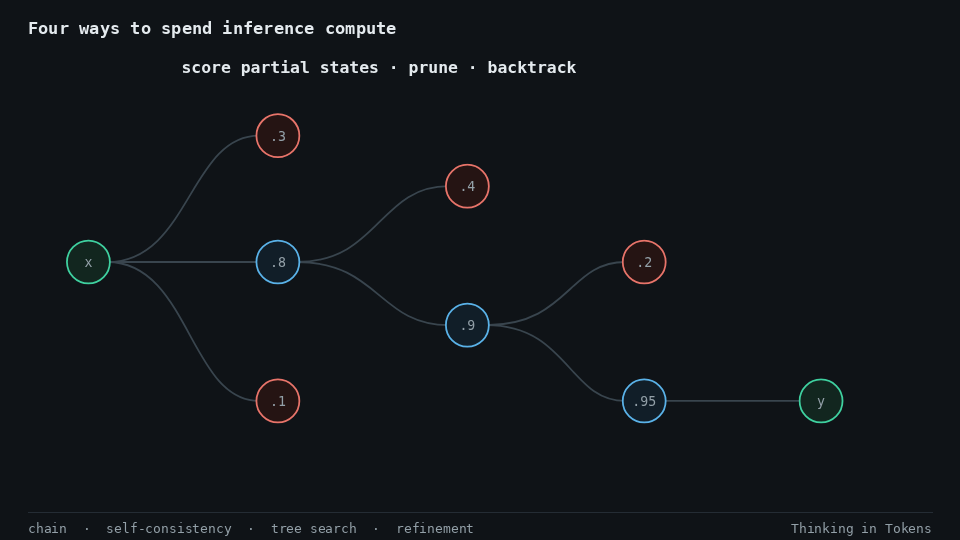
Animated comparison of one reasoning chain, sampled voting, tree search, and critique-and-revise loops.
Reasoning Models · Mechanisms

Thinking in Tokens

Why a familiar Transformer can buy serial compute by writing, what reasoning traces reveal, and when longer thought makes answers worse.
Published Updated 44 min read
Chain of ThoughtSearchLatent Reasoning
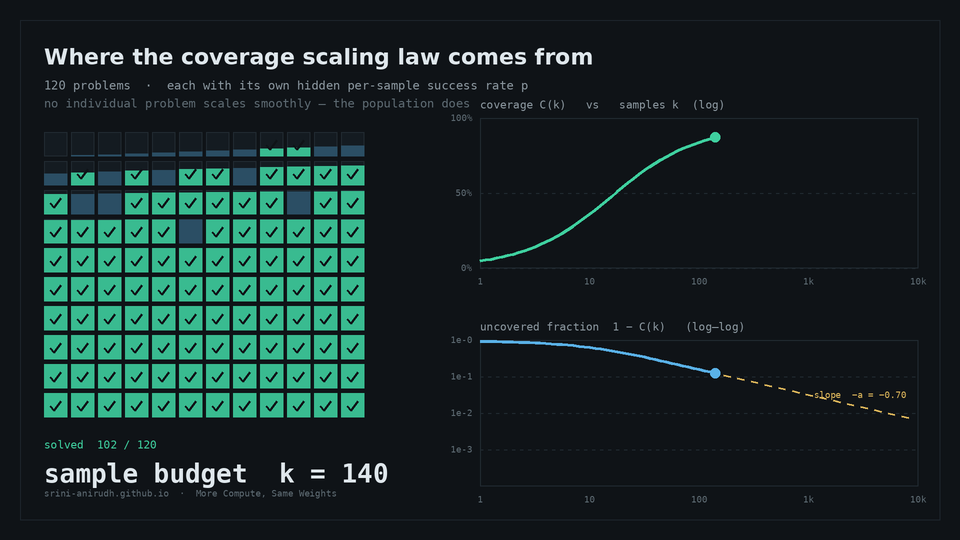
Animated problem grid becoming solved as inference sampling compute rises and a coverage curve approaches its verifier ceiling.
Reasoning Models · Test-time Compute

How Models Improve Without Changing Their Weights

Longer chains, more samples, search, and verifiers—plus why the best inference budget depends on the prompt rather than one global setting.
Published Updated 48 min read
Test-time ScalingVerificationCompute Allocation
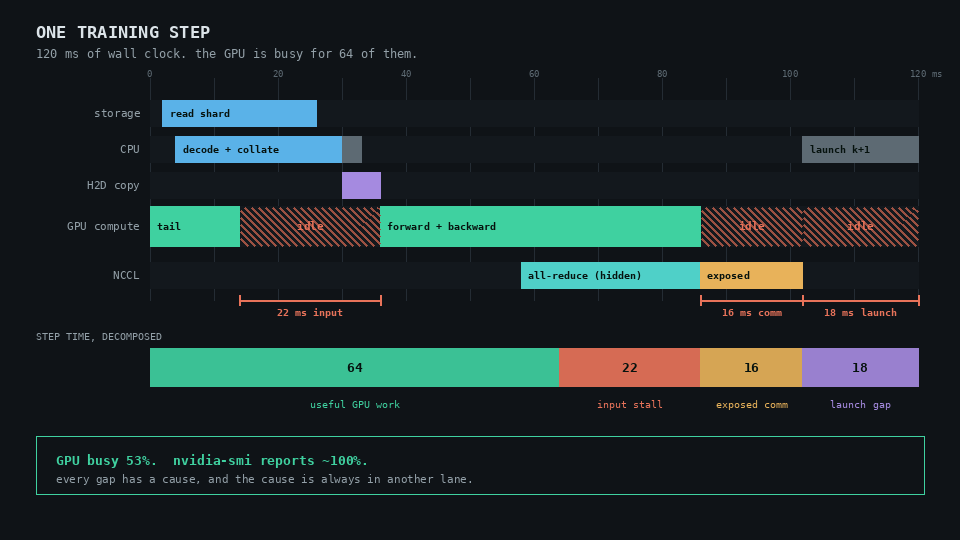
Animated ML systems timeline revealing compute, memory, communication, synchronization, and input bottlenecks.
ML Systems · Profiling · 01

How to Find What Is Slowing Your Model

A practical method for reading timelines and counters, using PyTorch Profiler and Nsight, diagnosing Roofline regimes, and testing optimization hypotheses.
Published 38 min read
ProfilingNsightPerformance
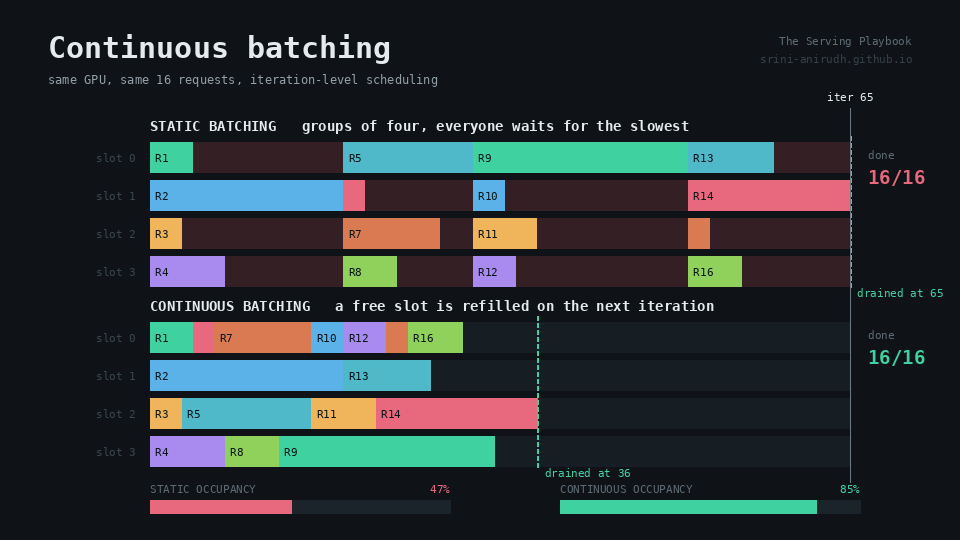
Animated serving timelines comparing static and continuous batching across GPU slots.
ML Systems · Scaling the Workloads · 02

The Serving Playbook

Continuous batching, paged KV, prefix caching, chunked prefill, disaggregation, distributed serving, speculative decoding, and goodput under SLOs.
Published Updated 62 min read
LLM ServingSchedulingPaged KV
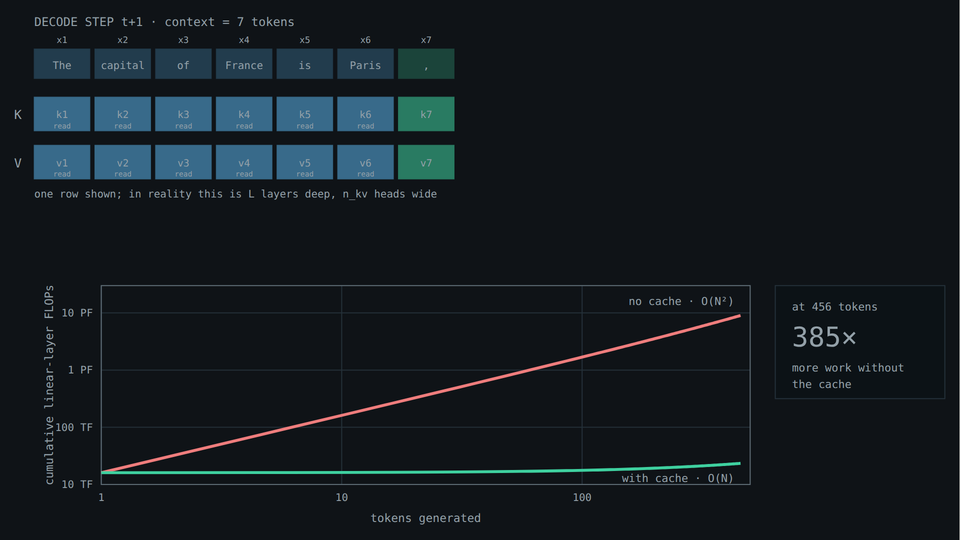
Animated LLM inference timeline progressing from prefill through serial decode and a growing KV cache.
ML Systems · Understanding the Workloads · 02

The Mechanics of LLM Inference

Why inference becomes a different machine: autoregression, prefill, decode, KV cache, batching, bandwidth, latency metrics, quantization, and multimodal workloads.
Published Updated 56 min read
InferenceKV CachePrefill & Decode
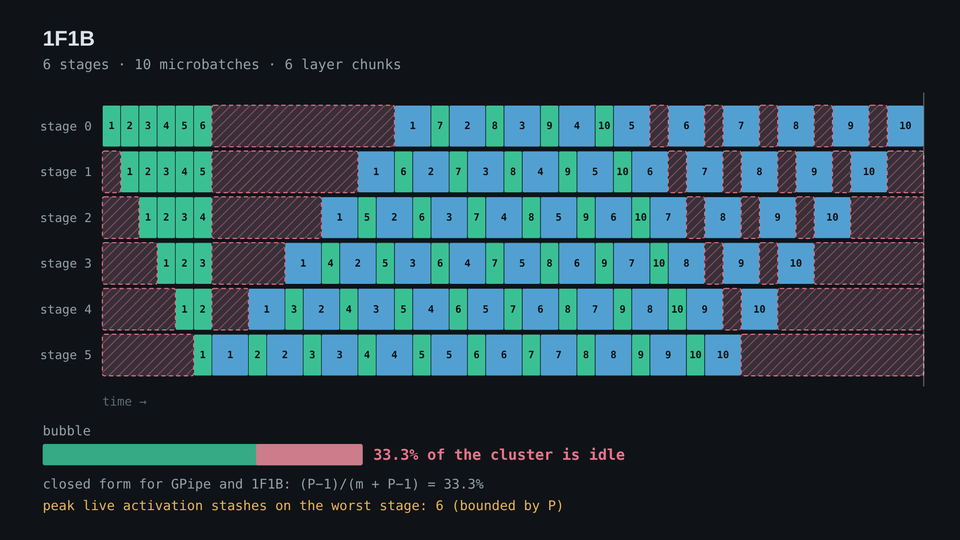
Animated pipeline-parallel schedule showing work distributed across a GPU cluster.
ML Systems · Scaling the Workloads · 01

The Parallelism Playbook

The six things a training workload can split, from DDP and ZeRO/FSDP through tensor, pipeline, context, expert, and hybrid parallelism.
Published Updated 48 min read
Distributed TrainingParallelismFSDP & ZeRO
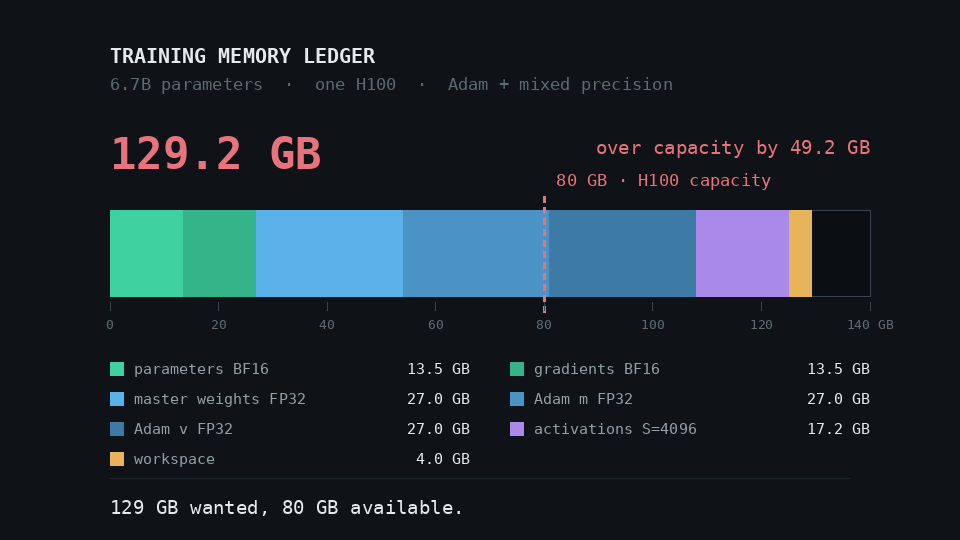
Animated memory ledger for the parameters, gradients, optimizer states, activations, and workspace in one transformer training step.
ML Systems · Understanding the Workloads · 01

Inside a Training Step

A first-principles walkthrough of tensor shapes, forward and backward passes, FLOPs, activation lifetimes, optimizer states, memory accounting, and checkpointing.
Published Updated 29 min read
TrainingTransformersMemory
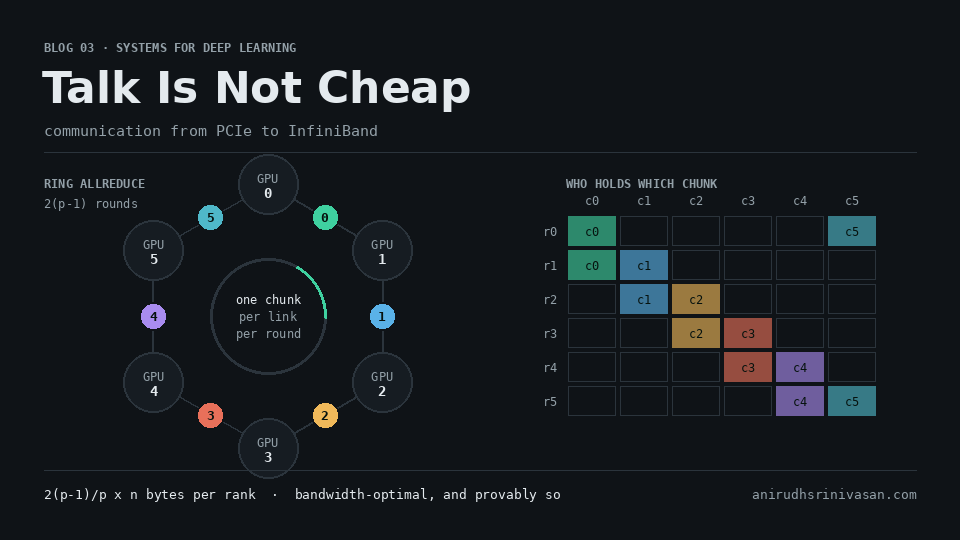
Animated ring AllReduce across GPUs connected through a communication hierarchy.
ML Systems · Understanding the Machine · 03

Talk Is Not Cheap

What changes when data is no longer local: PCIe, NVLink, NVSwitch, RDMA, topology, collective communication, and overlap.
Published Updated 60 min read
PCIe & NVLinkInfiniBandCollectives
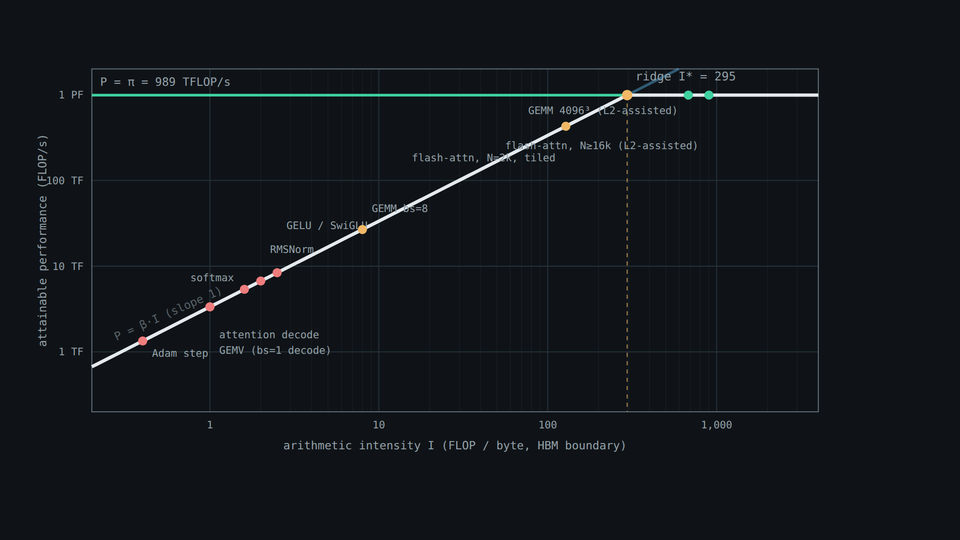
Animated Roofline chart comparing compute and memory-bandwidth limits.
ML Systems · Understanding the Machine · 02

Why Fast GPUs Still Wait for Memory

Arithmetic intensity and the Roofline model derived from first principles, then applied to GEMM, attention, fusion, optimizers, and real ML kernels.
Published Updated 46 min read
RooflineArithmetic IntensityPerformance
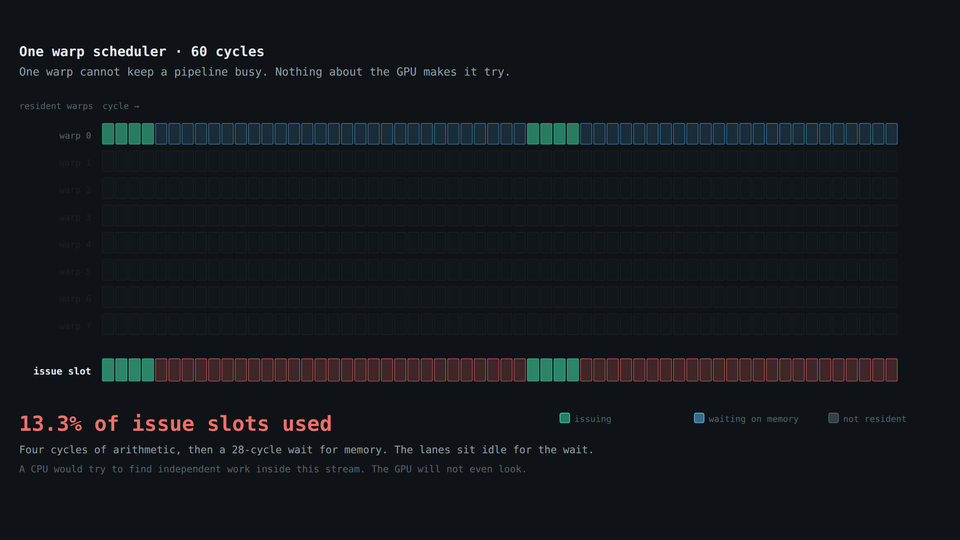
Animated comparison of CPU and GPU execution, latency hiding, and memory hierarchy.
ML Systems · Understanding the Machine · 01

Why GPUs Are Built for Deep Learning

Why CPUs and GPUs spend their transistor budgets differently—and how execution hierarchy, latency hiding, memory access, tiling, and Tensor Cores follow from that choice.
Published Updated 38 min read
CPU vs GPUParallelismGPU Architecture
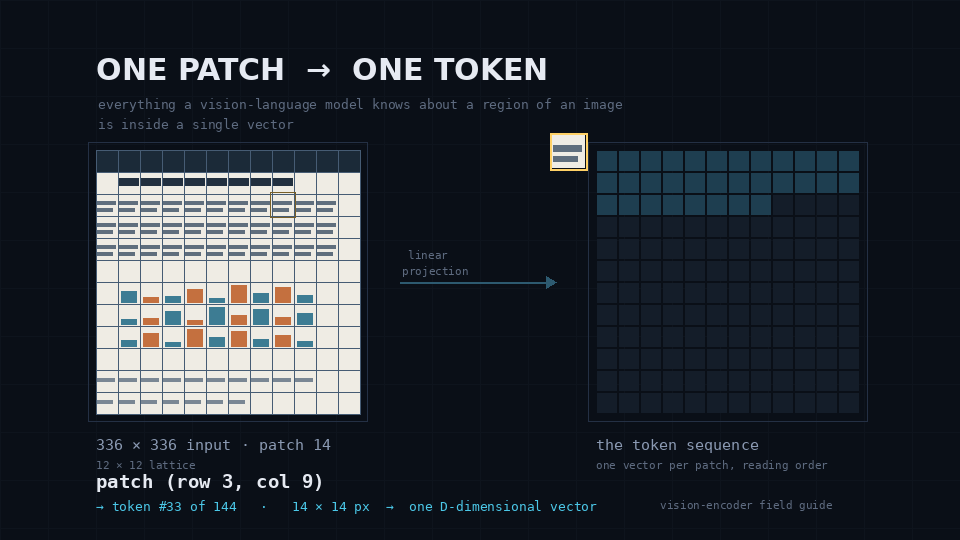
Animated document patch lattice becoming a sequence of visual tokens.
Vision-language models

Inside a Modern Vision Encoder

What changed in the visual half of VLMs: intake geometry, resolution, objectives, connectors, and the encoders models actually ship.
Published Updated 42 min read
Vision EncodersVLMsMultimodal
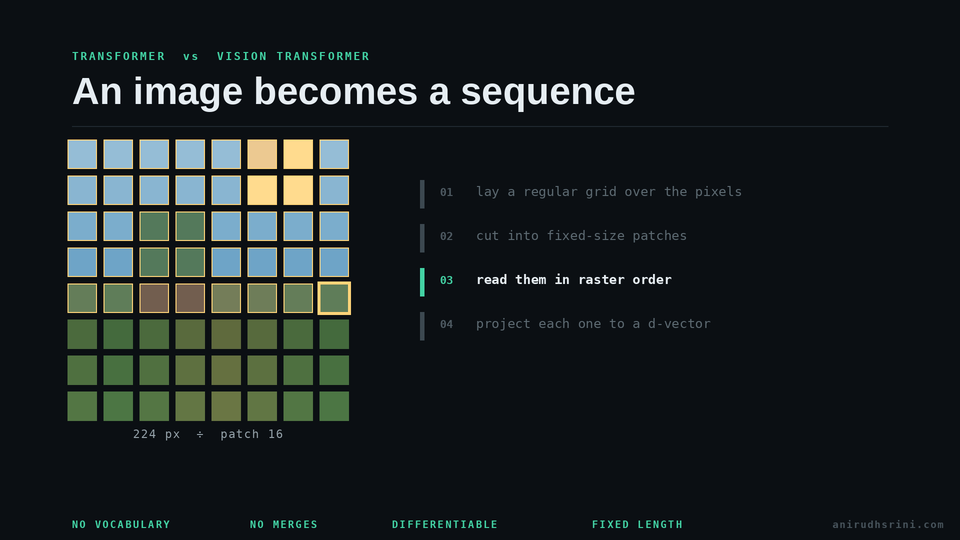
Animated image patchification sequence comparing a Transformer with a Vision Transformer.
Architecture · Foundations

One Transformer, Two Modalities

A block-by-block comparison: tokenizing versus patchifying, lookup tables versus projections, positions, masks, and heads.
Published Updated 24 min read
TransformersViTAttention
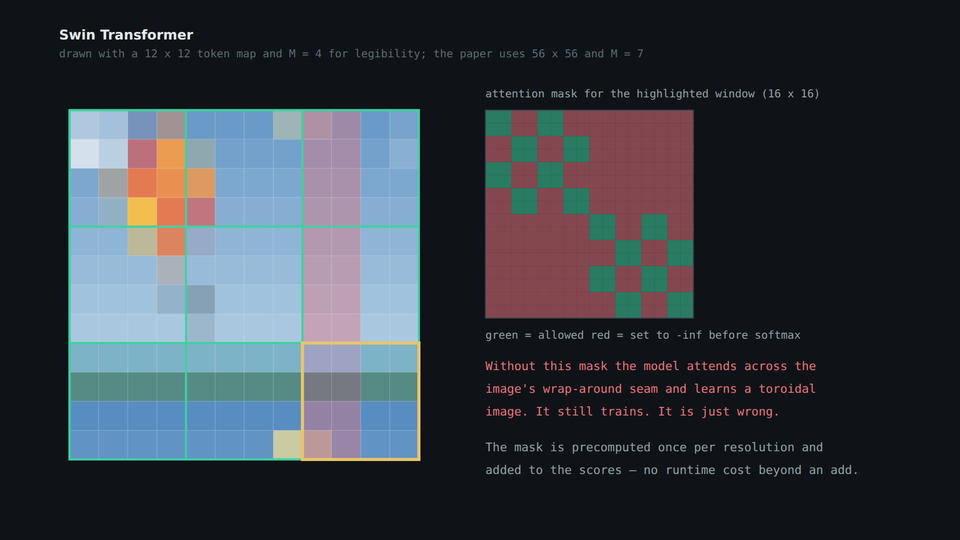
Animated shifted-window attention sequence showing how a Swin Transformer groups and reconnects visual tokens.
Architecture · Computer vision

An Image Is a Sentence

How Vision Transformers see, from the first patch embedding through ViT, DeiT, PVT, Swin, video transformers, and the cost of attention.
Published Updated 48 min read
Vision TransformersAttentionVideo
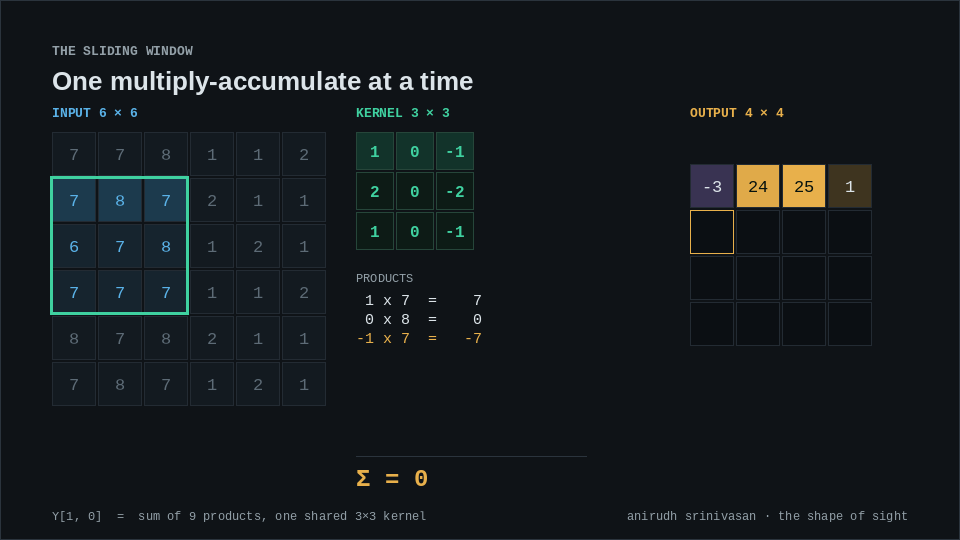
Animated convolution kernel sliding across an image grid and accumulating an output feature map.
Architecture · Computer vision

Across the CNNVerse

Thirty years of convolutional architecture, from sliding-window arithmetic and receptive fields to ResNet, EfficientNet, and ConvNeXt.
Published Updated 58 min read
ConvolutionCNNsArchitecture
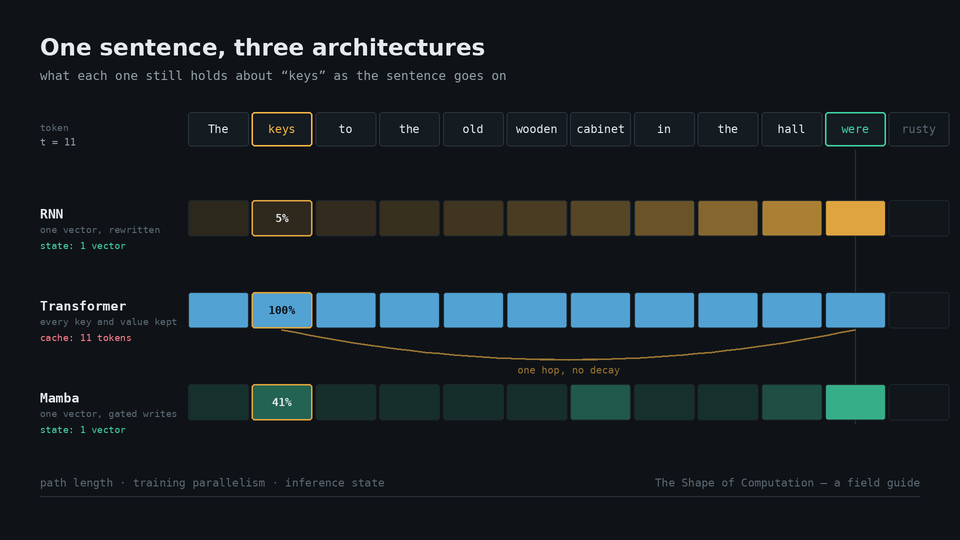
Animated timeline comparing how neural architectures move information from perceptrons through state-space models.
Architecture · Foundations

Evolution of ML Architectures

Sixty-seven years of neural architectures, including how information moves, what training costs, what inference carries, and how gradients flow backward.
Published Updated 64 min read
ArchitecturesComplexityState Space Models
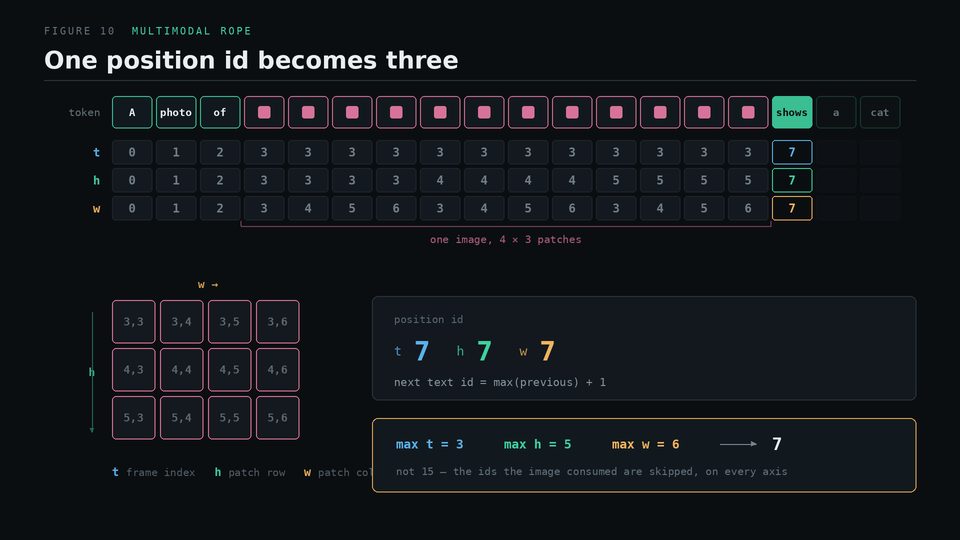
Animated M-RoPE diagram assigning temporal, height, and width positions to multimodal tokens.
Deep Learning Foundations · 04

How Models Know Where They Are

Absolute, sinusoidal, relative, RoPE, NoPE, 2D and Fourier features, and multimodal M-RoPE—explained visually.
Published Updated 38 min read
Position EncodingRoPELong Context
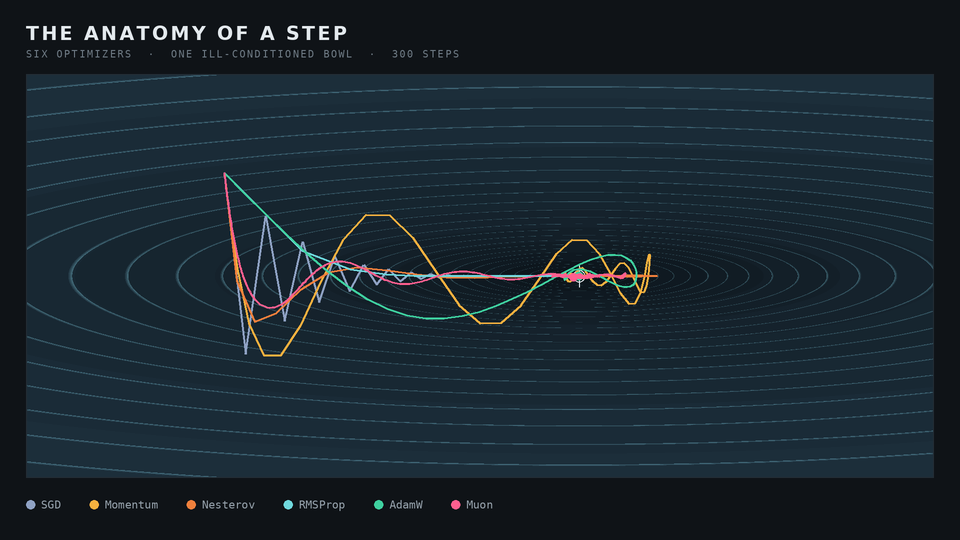
Animated optimizer trajectories comparing how different update rules move across a loss landscape.
Deep Learning Foundations · 05

What an Optimizer Actually Does

A mechanical tour from SGD to Muon: how optimizers build an update, what their state costs, and where a training step stalls.
Published Updated 34 min read
OptimizersDistributed TrainingMemory
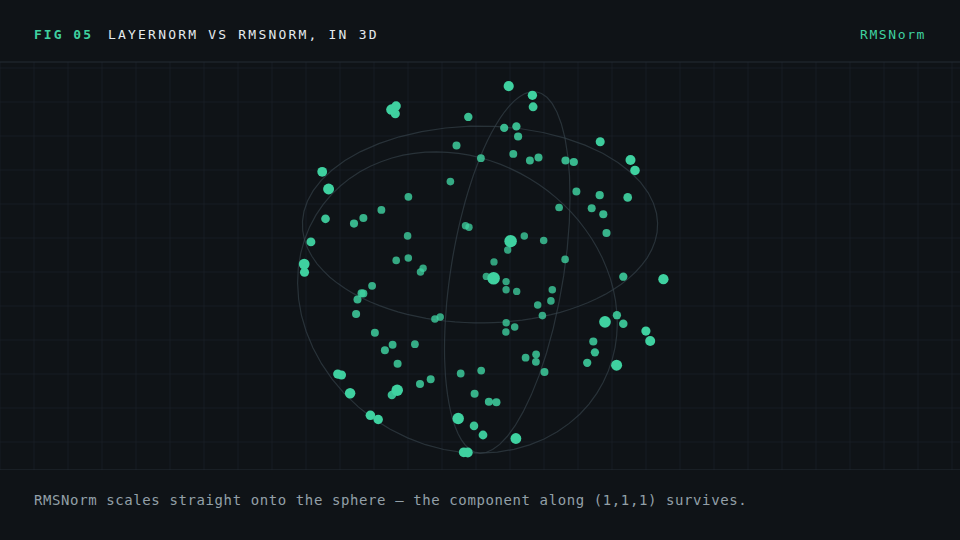
Animated point cloud showing how RMSNorm and LayerNorm transform a vector.
Deep Learning Foundations · 02

The Geometry of Normalization

Every normalization layer from BatchNorm to Peri-LN, plus why the modality interface in a VLM is a normalization problem.
Published Updated 45 min read
NormalizationTransformersTraining Stability
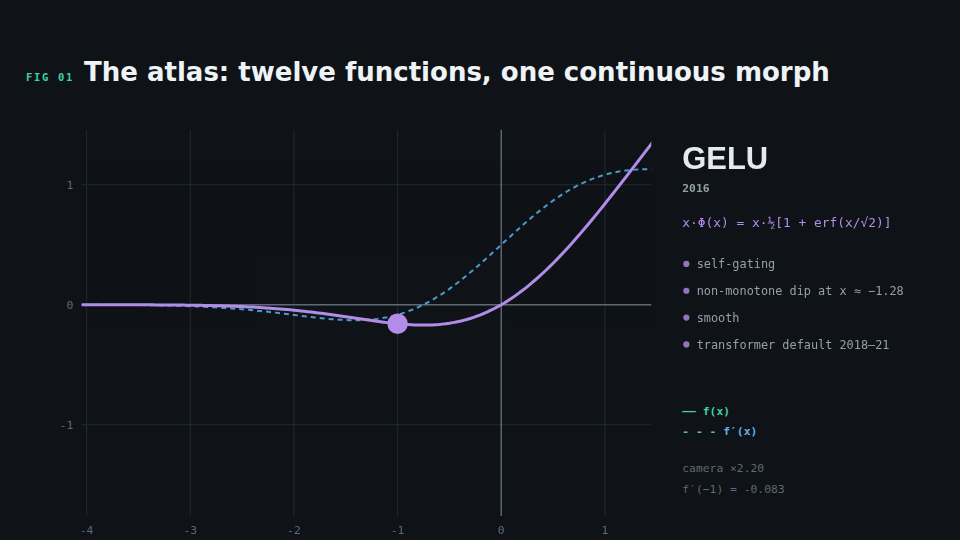
Animated activation-function curves and signal distributions from the Activation Atlas.
Deep Learning Foundations · 01

Why Neural Networks Need Nonlinearity

From sigmoid and ReLU to GELU, SwiGLU, and squared ReLU—with animated derivations and a map of what modern models use.

Published Updated 34 min read
Activation FunctionsTransformersOptimization